Table of Contents
ToggleThe Battlefield franchise has dominated multiplayer warfare for over two decades, delivering some of the most explosive and chaotic combat experiences in gaming. Now, Hollywood’s setting its sights on bringing that large-scale destruction to theaters. With a Battlefield movie officially in development, fans are buzzing about what a film adaptation might look like, and whether it can avoid the pitfalls that have plagued video game movies for years.
Movie adaptations of beloved gaming franchises have a notorious track record, but recent successes like The Last of Us and Sonic the Hedgehog prove that video game stories can translate to screens when handled right. The question isn’t whether Battlefield should become a movie, it’s whether the filmmakers can capture the franchise’s signature blend of squad-based tactics, vehicular mayhem, and destructible environments while crafting a narrative that works outside the multiplayer arena.
This guide covers everything currently known about the Battlefield movie: who’s producing it, what story direction it might take, casting rumors, and how it could impact the gaming franchise itself. Whether you’re a veteran Battlefield player or just curious about another gaming adaptation hitting Hollywood, here’s the full breakdown.
Key Takeaways
- A Battlefield movie adaptation is officially in development by Paramount Pictures with Electronic Arts as a co-producer, targeting a potential late 2027 or 2028 theatrical release with emphasis on authenticity and practical effects.
- The Battlefield franchise’s cinematic DNA—massive battles, vehicular warfare, destructible environments, and squad-based tactics—makes it naturally suited for film adaptation compared to other military shooters.
- Success requires the Battlefield film to balance visual spectacle with narrative clarity, translating multiplayer chaos into a coherent war story while respecting the franchise’s distinctive features like environmental destruction and combined arms warfare.
- Filmmakers plan to create an original story rather than adapt a specific game campaign, assembling an ensemble cast representing different military specialties that mirror the game’s class system and emphasize teamwork.
- The Battlefield movie must avoid the video game movie curse by finding the emotional core of squad-based warfare—individual characters mattering within a massive conflict—rather than just replicating surface gameplay mechanics.
- Iconic vehicles, weapons, and franchise-defining moments like destruction events and emergent “Battlefield moments” will be critical to satisfying gamers while appealing to general audiences unfamiliar with the gaming source material.
The Battlefield Franchise: From Game to Big Screen
Why Battlefield Is Perfect for a Movie Adaptation
Battlefield’s DNA is inherently cinematic. Unlike many shooters that focus on solo campaigns or small-unit tactics, the franchise has always emphasized massive battles with dozens of players, vehicles ranging from tanks to jets, and environments that crumble under sustained fire. These elements mirror the scale and spectacle of war films like Saving Private Ryan or 1917.
The franchise’s history spans multiple conflicts, World War I, World War II, Vietnam, modern warfare, and even near-future settings. This variety gives filmmakers a rich palette to work from. Each era comes with distinct visual styles, weaponry, and storytelling opportunities. A WWI-set Battlefield movie could lean into trench warfare’s grim brutality, while a modern setting could showcase the technological warfare and precision strikes that define contemporary military operations.
What sets Battlefield apart from other military shooters is its emphasis on teamwork and combined arms warfare. Lone wolf tactics rarely succeed in Battlefield games, victory requires coordination between infantry, armor, air support, and engineers. That squad-based structure translates naturally to ensemble war films, where multiple characters with different specialties work together toward a common objective.
The Franchise’s Cinematic DNA and War Film Legacy
Battlefield games have always borrowed heavily from war cinema. Battlefield 1 opened with a prologue that deliberately mirrored the chaos of films like Dunkirk, cycling players through multiple doomed soldiers to emphasize the industrial-scale carnage of WWI. Battlefield V’s War Stories presented anthology-style missions that felt like compressed war film vignettes.
The franchise’s sound design alone has won awards and recognition for its realism. The crack of bullets, the roar of tank engines, the whistle of artillery, these audio signatures rival anything in major war films. That attention to authenticity extends to weapon handling, vehicle physics, and even the way characters move under fire.
Many players describe core Battlefield gameplay as “Battlefield moments”, emergent situations where multiple systems collide to create memorable chaos. A pilot bailing from a jet to rocket-launcher an enemy helicopter mid-air. A building collapsing on a defending squad. A last-second revive turning a lost objective into a comeback victory. Capturing these organic, player-driven moments in a scripted film format presents both a challenge and an opportunity.
Official Announcements and Production Status
Who’s Behind the Battlefield Movie?
Paramount Pictures holds the rights to the Battlefield film adaptation, with production moving forward under the watch of several industry veterans. Reports from 2024 indicated that the project had secured a director and screenwriting team, though official announcements have been carefully controlled to avoid overpromising.
Electronic Arts, the publisher behind the Battlefield franchise, is involved as a co-producer. Their involvement ensures that the film maintains some connection to the source material, though EA’s track record with media adaptations remains limited. The production team has emphasized their commitment to authenticity and practical effects where possible, signaling an intention to ground the film in tactile realism rather than relying purely on CGI spectacle.
Industry insiders have noted that the creative team includes consultants with military backgrounds, similar to the approach DICE took when developing recent Battlefield titles. These advisors help ensure weapons, tactics, and military protocols reflect real-world operations, critical for a franchise that markets itself on authenticity.
Current Development Timeline and Release Window
As of March 2026, the Battlefield movie remains in active development with pre-production reportedly underway. No official release date has been announced, but industry tracking suggests a potential late 2027 or 2028 theatrical window if production stays on schedule.
Filming locations haven’t been confirmed, though rumors point to Eastern Europe or Morocco, regions that have hosted major war film productions due to their varied terrain and production infrastructure. The timeline aligns with other major video game adaptations currently in Hollywood’s pipeline, including several shooter franchises looking to capitalize on the renewed interest in gaming IP.
Production delays are common in large-scale action films, especially those requiring extensive practical effects and international shooting locations. The team’s emphasis on getting it right rather than rushing to market is encouraging, though it also means concrete details remain scarce.
What to Expect: Plot, Setting, and Story Direction
Potential Story Arcs and Battlefield Games to Draw From
The franchise offers multiple potential story foundations. Battlefield 3 and 4 featured geopolitical thriller narratives involving special forces operations, nuclear threats, and high-tech warfare. These modern military settings provide familiar territory for action films, with clear antagonists and recognizable weaponry.
Alternatively, historical settings like Battlefield 1 or Battlefield V offer different tonal possibilities. WWI’s trenches and early mechanized warfare present opportunities for grim, grounded storytelling similar to All Quiet on the Western Front. WWII settings remain evergreen in war cinema, though they’d need fresh angles to avoid retreading well-worn ground.
Some speculation points toward a hybrid approach, multiple timelines or interconnected stories across different eras, mirroring how Battlefield games have explored various conflicts. This anthology structure could showcase the franchise’s breadth while avoiding the trap of picking a single era that alienates fans of other entries.
Will It Follow a Specific Game or Create an Original Story?
Creating an original story within the Battlefield universe seems more likely than adapting a specific game’s campaign. Most Battlefield single-player modes serve as extended tutorials for multiplayer mechanics rather than delivering memorable narratives. The campaigns have moments of spectacle but rarely achieve the character depth or plot complexity that films require.
An original story allows filmmakers to cherry-pick the best elements from across the franchise, the destruction of Bad Company, the scale of Battlefield 1, the modern tech of Battlefield 4, without being constrained by existing plots. It also sidesteps fan expectations about specific characters or missions, giving creative teams more freedom.
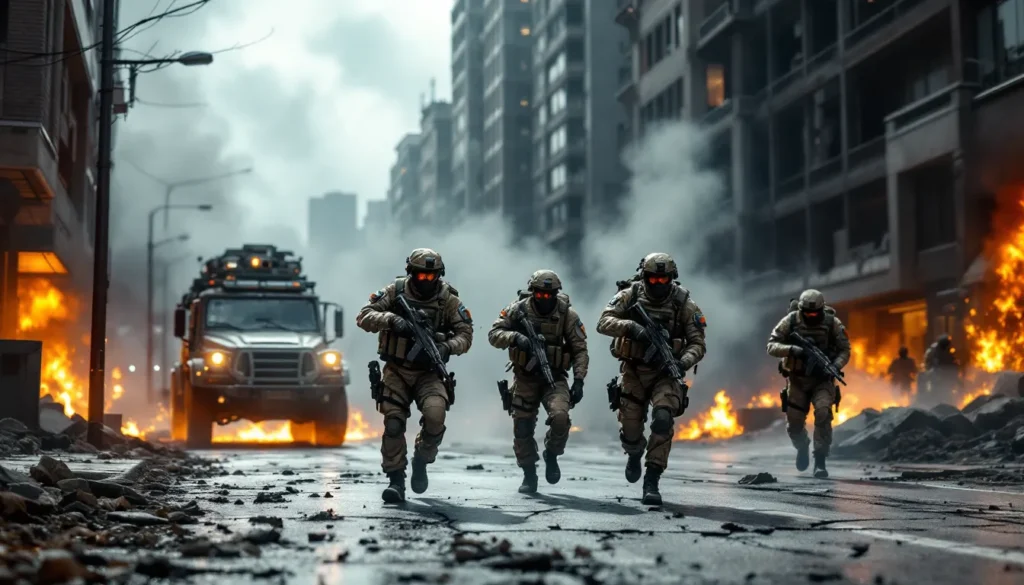
The film will likely focus on a squad of soldiers facing overwhelming odds, emphasizing the teamwork and combined arms tactics that define successful Battlefield gameplay. Expect multiple character perspectives, similar to ensemble war films, with specialists representing different classes: assault, medic, support, and recon. This structure mirrors the game’s class system while serving traditional war film storytelling.
Cast, Characters, and Military Authenticity
Rumored and Confirmed Cast Members
No official cast announcements have been made as of March 2026, but Hollywood rumor mills have circulated several names. The production reportedly seeks actors capable of handling both intense physical action sequences and carrying emotional weight, war films require performers who can convey exhaustion, fear, and camaraderie without relying on excessive dialogue.
Casting calls have emphasized ensemble work over star-driven vehicles. Rather than building the film around a single A-list name, the approach appears to favor a balanced cast where multiple characters share focus. This aligns with Battlefield’s squad-based gameplay and avoids the “chosen one” narrative trap that plagues many action adaptations.
Age diversity in the cast seems likely, reflecting the reality that military units include both fresh recruits and seasoned veterans. This mix allows for mentorship dynamics and contrasting perspectives on warfare, valuable tools for character development in compressed film runtimes.
How the Film Plans to Capture Authentic Squad-Based Warfare
Authenticity in military portrayals extends beyond just accurate uniforms and weapons. The film’s production team has emphasized tactical realism, how soldiers actually move, communicate, and coordinate under fire. Military advisors working with the cast reportedly include veterans with combat experience, similar to the approach used in films like Black Hawk Down or 13 Hours.
Squad-based warfare requires showing interdependence between roles. A medic keeping wounded soldiers in the fight. A support gunner providing suppressing fire. An engineer repairing disabled vehicles under enemy fire. These specialized roles create natural character archetypes while reflecting how players actually approach Battlefield matches.
Radio communication will likely play a significant role, mirroring the voice chat that defines multiplayer Battlefield. Overlapping radio chatter, urgent callouts, and the fog of war create tension and immersion. Getting this right requires balancing clarity for audiences with the chaotic reality of battlefield communications.
Challenges of Adapting Battlefield to Film
Avoiding the Video Game Movie Curse
Video game adaptations have historically struggled to satisfy both general audiences and fans of the source material. Films either dumb down the premise for mainstream appeal or drown in fan service that alienates casual viewers. The Battlefield movie faces the additional challenge of adapting a franchise built on multiplayer gameplay rather than story-driven campaigns.
Recent gaming adaptations that succeeded, The Last of Us, Arcane, Sonic 2, shared common traits: respect for source material paired with willingness to adapt rather than directly translate. They understood that what works in interactive media often fails in passive viewing. Critics at Polygon have noted that successful adaptations find the emotional core of their source material rather than just replicating surface elements.
Battlefield’s emotional core isn’t a specific character or plot, it’s the feeling of being a small part of a massive conflict, where individual actions matter but victory requires coordination. Translating that feeling to film means making audiences care about the squad while conveying the scale of the larger battle around them.
Balancing Multiplayer Chaos with Narrative Focus
Battlefield matches are gloriously chaotic. Vehicles explode, buildings collapse, 64+ players pursue independent objectives simultaneously. That emergent chaos creates memorable gaming moments but makes for incomprehensible cinema without careful framing and focus.
The film will need to balance spectacle with clarity. Wide shots establishing the battle’s scale must give way to focused sequences following specific characters through objectives. The editing rhythm becomes crucial, too much chaos overwhelms viewers, but too much calm loses Battlefield’s frenetic energy.
Multiplayer games lack traditional narrative arcs. Matches ebb and flow based on player skill and tactical decisions rather than scripted story beats. The film must impose traditional three-act structure on gameplay that resists it. Early sequences might mirror the opening chaos of a contested match, the midpoint could feature tactical adjustments and regrouping, and the climax would represent the final push for victory, or desperate last stand.
How the Battlefield Movie Could Impact the Gaming Franchise
Cross-Media Synergy and Potential Game Tie-Ins
Successful film adaptations often boost their source franchises. The Sonic films revitalized interest in the gaming series. The Witcher show drove players to a decade-old game. EA will almost certainly coordinate game releases or updates around the film’s theatrical window to capitalize on renewed attention.
Potential tie-ins could include movie-inspired game modes, cosmetic items, or even a standalone game set in the film’s universe. Battlefield Portal, the franchise’s mode allowing custom game creation, provides a ready-made platform for movie-themed content without requiring a full development cycle.
The film’s setting will likely influence future Battlefield titles. If the movie succeeds with a modern military setting, DICE might prioritize that era for the next mainline entry. A historical setting that resonates could prompt a return to WWII or Vietnam. Hollywood success provides valuable market research about which directions resonate with broader audiences beyond the core gaming community.
Fan Expectations vs. Hollywood Reality
Battlefield fans have specific expectations: destructible environments, vehicular warfare, recognizable weapons and maps, and the chaotic-but-tactical gameplay loop. Meeting all these expectations within a two-hour film while also appealing to general audiences who’ve never touched a controller presents fundamental challenges.
Some compromises are inevitable. Full environmental destruction might be limited to key set pieces due to budget constraints. The massive vehicle roster might be reduced to a handful of iconic choices. Gameplay mechanics like respawning obviously can’t translate literally. The question is whether these compromises feel like thoughtful adaptation or betrayal of the source material.
Managing fan expectations requires careful marketing. Early trailers and promotional materials will set the tone, either embracing the franchise’s gaming roots or positioning the film as a war movie that happens to carry the Battlefield name. How EA and Paramount thread this needle will largely determine the community’s reception before anyone sees a single frame.
Comparing Battlefield to Other Military Gaming Adaptations
Lessons from Call of Duty and Other War Game Films
Call of Duty has explored film and television adaptations for years, though projects have stalled in development hell. The rivalry between franchises extends to Hollywood, with both series competing to crack the code of translating military shooters to screens.
Other military gaming adaptations offer mixed lessons. Tom Clancy’s Ghost Recon and Splinter Cell have languished in development for years. The Halo series found moderate success on streaming but divided fans over creative liberties. These precedents suggest that military shooters face unique adaptation challenges, the gameplay loop of shooting enemies doesn’t inherently create compelling drama.
What works in military gaming adaptations is specificity. Showing unique aspects of the franchise rather than generic war movie beats. For Battlefield, that means emphasizing destruction, combined arms warfare, and squad tactics rather than lone hero narratives. It means showcasing moments that feel distinctly Battlefield rather than interchangeable with any military action film.
What Makes Battlefield Unique in the Adaptation Space
Battlefield’s emphasis on vehicles sets it apart from infantry-focused shooters. Tank columns, attack helicopters, fighter jets, the franchise treats these not as occasional power-ups but as core gameplay elements. A proper Battlefield film should feature vehicular combat as prominently as ground troops, with coordinated attacks between armor and infantry.
The destruction system remains Battlefield’s signature innovation. Buildings collapse under sustained fire. Cover disappears. Terrain transforms throughout matches. While fully dynamic destruction might exceed film budgets, key sequences should showcase this franchise-defining feature. Imagine a climactic battle where defenders must adapt as their fortified position literally crumbles around them.
Scale represents another differentiator. Where other shooters focus on small-unit tactics, Battlefield depicts massive engagements with multiple simultaneous objectives. The film should feel bigger than typical squad-based war movies, not just in explosive set pieces, but in conveying that the protagonists’ mission is one small part of a larger conflict. Supporting characters representing other squads, radio chatter about distant objectives, and background battles visible on the horizon all help establish this scope.
What Gamers Want to See in the Battlefield Movie
Iconic Vehicles, Weapons, and Battlefield Moments
Fans have clear wishlist items. The M1 Abrams tank. Little Bird helicopters. AC-130 gunship support. These iconic vehicles define the Battlefield experience and their absence would feel like a missed opportunity. Weapon choices matter too, the franchise’s attention to realistic ballistics and weapon handling should translate to how firearms are portrayed on screen.
Specific gameplay moments have become part of franchise lore. The “Rendezook” maneuver, bailing from a jet, rocket-launching an enemy aircraft, then re-entering your plane, exemplifies Battlefield’s physics-driven chaos. While too over-the-top for a grounded war film, moments that capture similar “only in Battlefield” energy would resonate with fans. Perhaps a desperate bail-out from a disabled helicopter that turns into an impromptu assault. Or engineers repairing a tank under fire while the crew holds off attackers.
Levolution events from Battlefield 4, massive environmental changes like collapsing skyscrapers or breaking dams, represent the franchise’s spectacle ceiling. Including at least one comparable moment would deliver the visual wow factor gamers associate with the series. According to aggregated reviews on Metacritic, the Battlefield entries that emphasized these moments scored highest with both critics and players.
Easter Eggs and Nods to the Gaming Community
Thoughtful references separate lazy fan service from genuine appreciation. Hearing the distinctive beep of an enemy vehicle being locked by a rocket launcher. Seeing a medic’s defibrillator revive a downed teammate. A brief shot of dog tags being collected. These small details signal that filmmakers understand the franchise’s DNA.
Map references could work as location names or radio callouts. Battles taking place in settings inspired by beloved maps like Operation Metro, Caspian Border, or Silk Road would trigger recognition without requiring knowledge of the games. Squad names, call signs, or graffiti could reference franchise history, a subtle “Bad Company” tag on a wall, for instance.
Voice lines from the games might appear as radio chatter or background dialogue. The urgent “I need ammo.” or “Enemy armor spotted.” callouts that define multiplayer communication could add authenticity while rewarding attentive fans. These nods should feel organic rather than forced, appearing naturally within the film’s reality.
Conclusion
The Battlefield movie sits at the intersection of Hollywood’s renewed interest in gaming IP and the franchise’s natural cinematic potential. With production actively moving forward and a theatrical release potentially arriving in the next few years, the project represents both significant opportunity and substantial risk for all involved.
Success requires threading multiple needles: delivering spectacle that justifies the theatrical experience, crafting characters audiences care about beyond their tactical roles, respecting the source material while adapting it for new audiences, and eventually creating a war film that stands on its own merits rather than coasting on brand recognition. The production team’s emphasis on authenticity and practical effects suggests they understand these challenges.
Whether the Battlefield movie joins the ranks of successful gaming adaptations or becomes another cautionary tale depends on execution in the literal sense, how well they execute the massive battle sequences, character moments, and franchise-defining features that could make this more than just another war movie. The gaming community will be watching closely, controllers in hand, ready to compare what they see on screen with the thousands of hours they’ve spent on virtual battlefields.
For now, details remain limited and speculation runs rampant. But one thing’s certain: when Hollywood takes on a franchise built on explosive chaos and squad-based warfare, the results will be anything but predictable. The next few years of development will determine whether Battlefield successfully makes the jump from game to big screen, or gets fragged in the attempt.