Table of Contents
ToggleWhat is Battlefield? This question has crossed the minds of millions of gamers since the franchise first launched in 2002. Battlefield is a first-person shooter video game series developed by DICE and published by Electronic Arts. The series has sold over 90 million copies worldwide and remains one of the most influential franchises in gaming history.
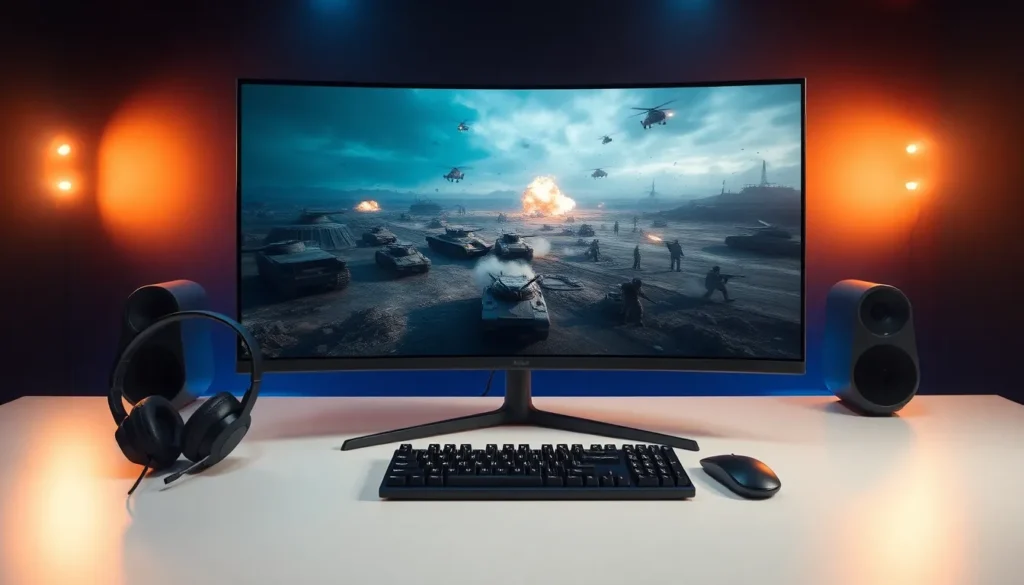
Battlefield games focus on large-scale military combat. Players engage in infantry battles, drive tanks, pilot aircraft, and command naval vessels across massive multiplayer maps. The series has always prioritized teamwork, strategy, and all-out warfare over individual run-and-gun gameplay.
This guide covers everything players need to know about Battlefield. It explores the franchise’s origins, core gameplay mechanics, most popular titles, and how Battlefield compares to other first-person shooters on the market.
Key Takeaways
- Battlefield is a first-person shooter franchise developed by DICE and published by Electronic Arts, launching in 2002 with Battlefield 1942.
- The series focuses on large-scale military combat with maps supporting up to 128 players, vehicles, and environmental destruction.
- Battlefield uses a class-based system that encourages teamwork—Assault, Medic, Engineer, Support, and Recon classes each serve distinct roles.
- The Frostbite engine powers modern Battlefield games, enabling dynamic destruction that reshapes maps during matches.
- Compared to Call of Duty, Battlefield emphasizes strategic, large-scale warfare with vehicles rather than fast-paced infantry combat on smaller maps.
- The franchise has sold over 90 million copies worldwide, with standout titles including Battlefield 2, Bad Company 2, Battlefield 1, and Battlefield 4.
The Origins of the Battlefield Franchise
The Battlefield series began with Battlefield 1942, released in September 2002. Swedish developer Digital Illusions CE (DICE) created the game, and Electronic Arts handled publishing duties. The game transported players to World War II battlefields across Europe, North Africa, and the Pacific.
Battlefield 1942 introduced gameplay elements that would define the entire franchise. Players could choose from five distinct classes: Scout, Assault, Anti-Tank, Medic, and Engineer. Each class served a specific purpose on the battlefield. The game also featured controllable vehicles, a groundbreaking feature at the time.
The original Battlefield supported 64 players on PC, which was massive for 2002. Maps included famous WWII locations like Stalingrad, Wake Island, and the Battle of Britain. This scale set Battlefield apart from competitors like Medal of Honor and Call of Duty.
DICE followed up with two expansion packs: The Road to Rome and Secret Weapons of WWII. These additions brought new maps, vehicles, and weapons to the base game. The success of Battlefield 1942 proved that large-scale multiplayer combat had a dedicated audience.
In 2004, DICE released Battlefield Vietnam. This sequel moved the action to the Vietnam War era and introduced helicopters as a major gameplay element. The game also featured period-appropriate music that players could blast from vehicle radios, a fan-favorite feature.
The franchise continued to grow with Battlefield 2 in 2005. This entry introduced the modern military setting that would dominate later titles. It also added the Commander role, allowing one player per team to coordinate strategy from an overhead view.
Core Gameplay Features That Define Battlefield
Battlefield games share several core features that distinguish them from other shooters. Understanding these elements helps explain why the franchise has maintained its popularity for over two decades.
Large-Scale Maps and Player Counts
Battlefield maps are big. Really big. Most entries support 64 players simultaneously, and Battlefield 2042 pushed this to 128 players on current-generation consoles and PC. These maps feature multiple capture points, varied terrain, and plenty of space for vehicle combat.
The scale creates a different type of gameplay. Firefights break out across the map simultaneously. One squad might defend a hilltop while another pushes into an enemy base. This chaos feels authentic to actual warfare.
Vehicle Combat
Vehicles have always been central to Battlefield gameplay. Players can drive tanks, jeeps, and APCs. They can pilot jets, helicopters, and transport aircraft. Some maps even include boats and submarines.
Vehicle combat adds strategic depth. A skilled tank crew can dominate infantry positions. A good helicopter pilot can turn the tide of battle. But vehicles also have weaknesses, engineers and anti-vehicle weapons keep them in check.
Class-Based Teamwork
Battlefield uses a class system that encourages cooperation. Assault players provide front-line firepower. Medics heal and revive teammates. Engineers repair vehicles and destroy enemy armor. Support classes provide ammunition and suppressive fire. Recon players spot enemies and eliminate targets from distance.
This system means no single player can do everything. Teams that work together dominate teams that don’t. A lone wolf might get some kills, but coordinated squads win matches.
Destruction
The Frostbite engine powers most modern Battlefield games. This engine enables environmental destruction on a massive scale. Players can blow holes in walls, collapse buildings, and reshape the battlefield itself.
Destruction isn’t just visual spectacle. It changes how matches play out. That building providing cover? An enemy tank can level it. That wall blocking your path? Blow it open. Battlefield maps look different at the end of a match than they did at the beginning.
Popular Battlefield Titles Throughout the Years
The Battlefield franchise includes numerous entries across multiple platforms. Several titles stand out as particularly influential or beloved by the community.
Battlefield 2 (2005) refined the formula established by earlier games. It introduced modern military combat, the squad system, and unlockable weapons. Many fans consider it the definitive classic Battlefield experience.
Battlefield: Bad Company (2008) brought the series to consoles with a single-player campaign featuring memorable characters. Its sequel, Bad Company 2, remains one of the most praised entries for its map design and destruction system.
Battlefield 3 (2011) showcased the Frostbite 2 engine with stunning graphics and audio design. The game competed directly with Call of Duty: Modern Warfare 3 and attracted millions of new players to the franchise.
Battlefield 4 (2013) built on its predecessor with “Levolution” events, scripted destruction moments that dramatically altered maps. A collapsing skyscraper on the Siege of Shanghai map became an iconic moment in franchise history.
Battlefield 1 (2016) surprised fans by returning to World War I. The game featured period-accurate weapons, vehicles, and locations. Critics praised its atmospheric presentation and willingness to explore a less-covered conflict.
Battlefield V (2018) continued the historical setting with World War II. It introduced building mechanics and removed premium season passes, making all maps free for players.
Battlefield 2042 (2021) returned to the near-future setting. Even though a rocky launch, DICE continued supporting the game with updates and new content.
Battlefield vs. Other First-Person Shooters
How does Battlefield compare to other major shooters? The differences explain why certain players prefer one franchise over another.
Battlefield vs. Call of Duty
This rivalry defines the FPS genre. Call of Duty emphasizes fast-paced, infantry-focused combat on smaller maps. Battlefield prioritizes large-scale warfare with vehicles and destruction.
Call of Duty matches feel tighter and more intense. Battlefield matches feel grander and more strategic. Neither approach is objectively better, they serve different player preferences.
Call of Duty typically offers more polished single-player campaigns. Battlefield has traditionally focused on multiplayer, though entries like Bad Company featured strong story modes.
Battlefield vs. Halo
Halo occupies a different space as a sci-fi shooter with arena-style gameplay. Battlefield’s military realism contrasts with Halo’s futuristic weapons and abilities.
Halo maps are smaller and more symmetrical. Battlefield maps sprawl across varied terrain. Halo emphasizes equal starts and weapon pickups. Battlefield uses loadout systems and class abilities.
Battlefield vs. Squad and ARMA
Games like Squad and ARMA offer more realistic military simulation. They require more patience, communication, and tactical thinking than Battlefield.
Battlefield sits between arcade shooters and military simulators. It offers more realism than Call of Duty but remains accessible to casual players. This middle ground attracts players who want scale without steep learning curves.
The Battlefield franchise occupies a unique position in the FPS market. No other major series delivers the same combination of large maps, vehicle combat, destruction, and team-based gameplay.