Table of Contents
ToggleMinecraft’s blocky sandbox has outlasted most gaming trends for a reason: it’s a creative playground that rewards ambition. After the first night spent hiding from creepers and the initial rush of finding diamonds, many players hit the same question, what should I actually build? The world stretches endlessly in all directions, and that freedom can feel paralyzing.
This guide compiles over 50 build ideas across every playstyle, from essential survival infrastructure to jaw-dropping architectural projects that’ll make your friends question their building skills. Whether someone’s grinding hardcore survival or relaxing in creative mode, these projects range from weekend builds to multi-month mega projects. No filler, no generic “build a house” advice, just concrete ideas with enough detail to get started immediately.
Key Takeaways
- A well-organized starter base with dedicated storage, enchanting rooms, and strategic bed placement eliminates backtracking and sets the foundation for successful long-term worlds in Minecraft.
- Automated farms and mob-grinding systems—including iron farms, crop automation, and villager trading halls—transform Minecraft from resource scavenging to passive income generation.
- What to build in Minecraft spans from essential survival infrastructure to jaw-dropping architectural projects like medieval castles, modern mansions, and mega-cities that can define your gaming legacy.
- Redstone contraptions and transportation networks such as auto-smelters, sorting systems, minecart rails, and ice highways separate casual players from engineers while making vast worlds feel connected.
- Block variety, depth layering, and thoughtful landscaping integration prevent monotonous designs and make builds feel organic and professional rather than flat and rushed.
- Multiplayer and community builds thrive through collaborative infrastructure like server towns, themed districts, and shared farms that give each player meaningful roles while creating engaging social gameplay.
Essential Starter Builds Every Player Needs
Shelter and Base Foundations
The first structure in any new world sets the tone for everything that follows. A starter base doesn’t need to be elaborate, but it should handle core functions: storage, smelting, crafting, and a bed. Smart players carve into hillsides or dig shallow underground bunkers on day one, then expand systematically.
A proper storage room makes or breaks organization later. Chest walls with item frames showing contents beat random chests scattered everywhere. Allocate at least a 5×5 space early, building materials in one section, ores and ingots in another, mob drops in a third. Color-coded shulker boxes add another layer once the End is accessible.
Enchanting rooms deserve dedicated space. The optimal setup requires 15 bookshelves surrounding an enchanting table with one block of clearance. Players often integrate this into a library aesthetic, but the functional requirement is non-negotiable for max-level enchants. Position it near the storage and anvil for efficiency.
A bedroom wing might sound excessive, but beds placed near key work areas eliminate backtracking. Keep one near farms, mines, and building projects. In multiplayer, individual bedrooms with personalized designs add personality and prevent spawn conflicts.
Resource Farms and Automation Systems
Farms shift Minecraft from scavenging to thriving. A basic crop farm needs water source blocks every four blocks in both directions, with rows of wheat, carrots, potatoes, and beetroot. Villagers accelerate this, farmer villagers will harvest and replant automatically if given enough space and inventory slots.
Mob farms generate gunpowder, bones, string, and arrows passively. The simplest design uses a dark spawning platform with water channels funneling mobs into a 23-block drop, leaving them at half a heart for one-hit kills. Position these at least 128 blocks from other spawnable areas for maximum efficiency. Players looking to refine their approach should consult Essential Minecraft Techniques for advanced mob spawning mechanics.
Iron farms became mandatory after villagers and golems changed in Java Edition 1.14. Modern designs cluster villagers with workstations and beds, spawning golems that die to lava or fall damage. These produce hundreds of iron ingots per hour, essential for hoppers, rails, and tools. The design varies between Java and Bedrock, so verify compatibility.
Animal farms need breeding stations for cows, pigs, sheep, and chickens. Separate pens prevent overcrowding and lag. Automatic chicken cookers using lava and hoppers provide cooked meat indefinitely. Sheep farms benefit from grass regeneration areas, shear them instead of killing for renewable wool.
A villager trading hall maximizes emerald income and resource access. Trap villagers in 1×1 cells with workstations, cycling professions until desirable trades appear (Mending books, efficiency tools, bulk building blocks). This takes patience but pays dividends in late-game gear.
Impressive Architectural Projects
Medieval Castles and Fortresses
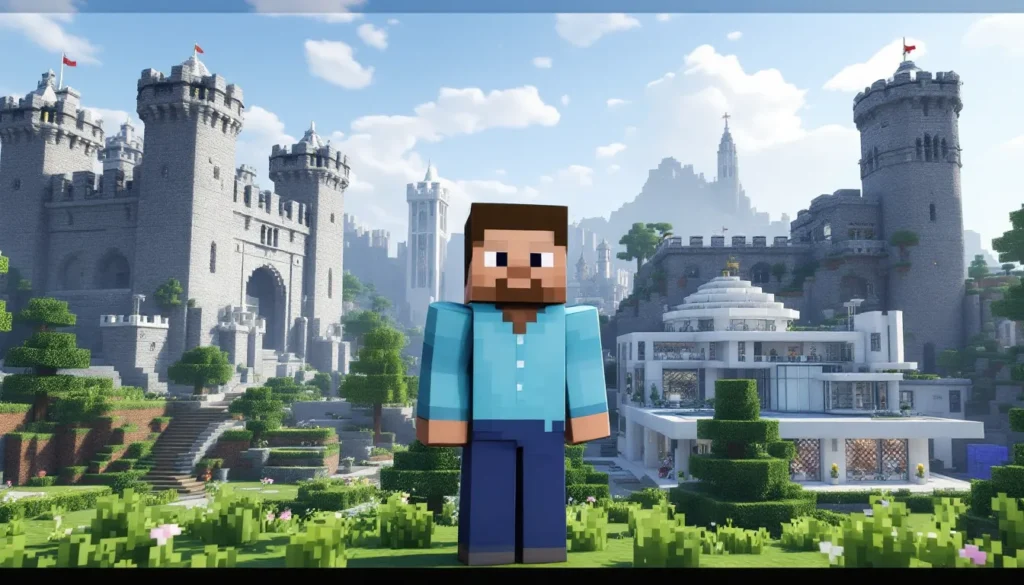
Castles dominate landscapes and signal ambition. A proper medieval castle includes defensive walls at least four blocks thick, corner towers rising 20-30 blocks, and a central keep with throne room, armory, and barracks. Use cobblestone, stone bricks, and andesite for texture variation. Oak and spruce wood beams add structural detail.
Curtain walls with crenellations (the tooth-pattern parapets) create authentic medieval profiles. Space towers every 15-20 blocks along the perimeter. Interior courtyards should house farms, smithies, and stables. Drawbridges using sticky pistons add functional flair, though they’re redstone-intensive.
Fortress designs lean more utilitarian, thicker walls, fewer windows, military-focused interiors. Think barracks, armories, training yards, and defensive archer positions. Integrate these with existing terrain by building into mountains or cliffsides. Banners with custom designs mark territories and add visual interest.
Castles pair well with surrounding villages, farms, and roads. Build a castle town spreading from the main gates, houses, markets, guild halls, and a church or cathedral. This turns a single project into a sprawling medieval realm.
Modern Mansions and Luxury Homes
Modern builds trade stone for glass, concrete, and quartz. A luxury mansion uses white concrete, smooth stone, and massive glass panels for that minimalist aesthetic. Cantilevered sections (floors extending beyond the base) create dramatic silhouettes. Pools with infinity edges overlooking valleys or oceans are signature touches.
Interiors need open floor plans, living rooms flowing into kitchens, minimal wall separation. Use concrete powder (which falls) carefully or convert it to solid concrete with water. Quartz stairs and slabs form furniture: couches, tables, counters. Lighting from sea lanterns or shroomlights keeps things bright and modern.
Contemporary builds work well with color blocking, stark white sections contrasted with black concrete or dark prismarine. Flat roofs (or extremely low pitch) distinguish these from traditional peaked roofs. Gardens with trimmed hedges (leaf blocks sculpted precisely) complete the upscale look.
Multiple garage bays showcasing vehicle builds (minecart systems styled like cars) add personality. Home theaters with rows of stairs as seating, massive item frame screens, and hidden redstone lighting systems bring builds to life. According to detailed build analyses on Twinfinite, modern Minecraft homes have surged in popularity since the introduction of concrete blocks in version 1.12.
Fantasy and Themed Structures
Fantasy builds ignore real-world physics and embrace Minecraft’s creative potential. Wizard towers spiral upward with irregular shapes, combine stone brick, purpur blocks, and end rods for magical energy effects. Top floors house enchanting setups, brewing stands, and libraries. Use trapdoors, stairs, and slabs to create curved surfaces.
Elven treehouses integrate with mega-taiga or jungle biomes. Build platforms spiraling around massive custom trees (or giant naturally-generated ones). Use oak, birch, and spruce in combination with vines and leaf blocks. Bridges connect multiple trees, creating a canopy village.
Dwarven strongholds belong underground. Mine out enormous halls with pillars every 10 blocks supporting vaulted ceilings. Forge rooms with lava flows, massive anvils (built from iron blocks and stone), and gem-encrusted throne rooms fit the fantasy. Strip-mine aesthetics become intentional design.
Steampunk cities combine industrial materials, copper blocks (especially weathered variants), iron bars, and lots of redstone machinery. Airship docks, clockwork towers with moving pistons, and factories belching smoke (campfires behind trapdoors) create that Victorian-industrial vibe.
Functional Builds That Enhance Gameplay
Redstone Contraptions and Automated Systems
Redstone separates casual builders from engineers. Auto-smelters using hoppers above and below furnaces keep smelting continuous, feed in ore at the top, fuel from the side, collect ingots at the bottom. Scale this to 10+ furnaces for bulk processing.
Sorting systems route items into designated chests using hopper chains and item filters (specific items in hoppers lock the flow). These take planning but eliminate manual sorting forever. Popular designs use a main collection point feeding into a sorter that splits into 20+ categories.
Piston doors range from simple 2×2 flush doors to massive 10×10 castle gates. Sticky pistons push and pull blocks in sequence, revealing entrances. Hidden doors behind bookshelves, paintings, or waterfalls add intrigue to bases. Tutorials are essential, these require precise timing and positioning.
Automatic farms take crop and mob farming further. Sugar cane and bamboo farms use observers detecting growth and pistons breaking stalks into hoppers. Raid farms exploit village mechanics to spawn waves of illagers, dropping totems of undying and emeralds. These are complex but absurdly efficient.
Practic players can find detailed walkthroughs for complex redstone projects on platforms like Game8, where community-tested designs are documented with screenshots and block counts. Many of these advanced builds benefit from studying Minecraft Strategies to understand the underlying game mechanics.
Transportation Networks and Infrastructure
Good infrastructure makes worlds feel connected. Minecart systems beat walking, especially across thousands of blocks. Powered rails every 38 blocks on flat terrain maintain speed indefinitely. Underground tunnels protect from mobs and weather, excavate 3 blocks high, 3 wide, place rails down the center.
Ice highways let players sprint-slide across vast distances. Pack ice or blue ice in a 2-wide trench, add barriers or walls, and sprint, blue ice is fastest. These work wonders in the Nether where distances shrink by 8x compared to the Overworld.
Nether portals multiply in function with planning. Build a Nether hub at spawn with tunnels branching to distant Overworld locations. Each tunnel ends with a portal that links to a corresponding Overworld base thousands of blocks away. Label clearly with signs or maps.
Elytra courses challenge flight skills. Build rings to fly through, parkour sections requiring precise momentum, and aerial checkpoints. These turn transportation into gameplay.
Harbors and docks organize boat travel. Build piers with boat storage, lighthouse towers with beacons marking safe channels, and shipyards for constructing decorative vessels. Works beautifully on coastlines or river networks.
Creative and Artistic Builds
Pixel Art and Statues
Pixel art translates images into block-by-block colored wool or concrete. Start small, Mario sprites, Pokémon, or gaming logos at 16×16 or 32×32. Online converters generate block palettes from uploaded images, showing exactly which blocks to place where. Build these vertically as wall art or flat on the ground visible from above.
3D statues demand more planning. Sketch rough proportions on graph paper or use structure planning tools. Build the skeleton first (the core frame), then add layers outward for detail. Armor stands, banners, and mixed block types create texture, weathered copper for aged metal, concrete for clean surfaces.
Mob statues work well at enlarged scale, a 30-block-tall creeper, Enderman, or wither. Place these near spawn or at world borders as landmarks. Interior lighting (glowstone hidden inside) makes them visible at night.
Monuments and memorials commemorate achievements. Beat the Ender Dragon? Build a dragon skull entrance. Hardcore death? Memorial statue at the death site (if you’re in a shared world). These add narrative to worlds.
Landscaping and Terrain Transformation
Custom biomes reshape natural terrain into personal visions. Flatten mountains into tiered gardens with waterfalls cascading between levels. Plant forests in deserts or create desert oases with palm trees (jungle wood) and pools. WorldEdit and MCEdit help with massive terraforming, but manual work feels more earned.
Mountain carving transforms cliff faces into monuments, giant faces, runes, or architectural facades. Mark the outline with colored wool, then excavate everything outside those boundaries. This is time-intensive but creates iconic landmarks visible for thousands of blocks.
Underwater bases surround bubble columns (magma blocks pull down, soul sand pushes up) with glass domes or tubes connecting chambers. Conduit power eliminates drowning concerns and lets players mine normally. Fill sections with kelp farms, guardian farms, or aquariums showcasing tropical fish and axolotls.
Floating islands defy gravity. Build islands at cloud level (Y:200+) with waterfalls pouring into void below. Connect with bridges, ziplines (cobwebs and water streams), or elytra launchers. These work especially well for elven or celestial themes.
Zen gardens use gravel, sand, slabs, and foliage to create peaceful retreats. Cherry blossom trees (if using newer versions), koi ponds with tropical fish, stone lanterns (end rods on slabs), and carefully placed greenery make perfect creative-mode relaxation projects. Major gaming sites like Shacknews have covered the rising trend of meditative builds in Minecraft’s community as players seek calmer creative outlets.
Survival Mode Challenges and Goals
Hardcore Survival Bases
Hardcore bases prioritize function and safety, one death ends the world. Build in defensible locations: islands, mesa plateaus, or deep underground. Walls, lighting, and iron golems patrol the perimeter. Avoid risks, no unnecessary height, lava, or deep caves without full gear.
Bunker designs minimize exposure. Dig down to Y:11 for diamond-level mining, then expand horizontally into living quarters, farms, and storage. Use iron doors with buttons (mobs can’t open), trapdoors on windows (skeletons can’t shoot through), and magma blocks in water channels to prevent mob entry.
Escape tunnels give backup exits if the main base is breached. Minecart tracks leading to secondary shelters scattered across the world ensure survival options. Ender chests store critical items (totems, golden apples, backup gear) accessible anywhere.
Resource caching distributes valuables. Don’t keep everything in one base, separate storage sites hold backup supplies. Mark coordinates in books or signs. Hardcore rewards paranoia.
Mega Projects for Long-Term Worlds
Mega builds devour hundreds of hours but define legacy. A perimeter clears a 256×256 area to bedrock for a single massive mob farm producing every drop type. This requires TNT dupers (Java exploit) or absurd manual labor, but generates enough loot to never farm again.
City projects sprawl across thousands of blocks. Plan districts, residential, commercial, industrial, governmental. Build unique structures for each: apartment blocks, shops, factories, city halls. Add roads, streetlights, parks, and metro systems. Population with villagers makes it feel alive. Detailed Minecraft Ideas can provide inspiration for different architectural styles across city sectors.
Replica builds recreate real or fictional locations, Hogwarts, Minas Tirith, entire cities like New York or Venice. These demand reference images, careful scaling, and immense patience. Many builders work in teams, dividing sections. The payoff is legendary, these builds get showcased and shared across communities.
Rail networks connecting every biome and structure. Chart the world, mark locations, then engineer rail lines linking them all. Add stations with maps showing the network. This turns exploration into infrastructure.
Beacon pyramids stack for flex. A max-range beacon needs a 9×9, 7×7, 5×5, and 3×3 pyramid, 1,476 blocks of iron, gold, diamond, emerald, or netherite. Multiple beacons arranged artistically (forming patterns or symbols from above) are the ultimate endgame flex. Players committed to the longest grinds often reference The Ultimate Minecraft Guide for efficient resource gathering routes.
Multiplayer and Community Build Ideas
Server Towns and Cities
Multiplayer worlds thrive on collaborative builds. Server towns let players claim plots around a central hub. Designate a town square with community storage, market stalls for trades, and a bulletin board (signs on walls) for server announcements. Roads connect player homes, enforce consistent road width and lighting.
Themed districts organize cities functionally. A commercial district has player-run shops with item frames displaying goods and pricing. An industrial zone houses shared farms and redstone machinery. A residential area offers pre-built house plots or empty lots for custom builds.
Town halls serve as server headquarters. Build meeting rooms with seating (stairs), administrative offices, and a vault for community resources. Some servers run governments with elected positions, rules, and events.
Community farms provide shared resources. Build massive farms for crops, mobs, and animals that all players can access. Donation chests let players contribute and withdraw items. Establish honor systems or use access permissions.
Mini-Games and Adventure Maps
PvP arenas host combat tournaments. Build contained spaces with balanced terrain, cover, elevation changes, but no exploits. Lava moats or void borders prevent escapes. Spectator boxes let others watch. Stock with gear via item dispensers for fair starts.
Parkour courses test jumping precision. Use slabs, stairs, fences, and mixed block types at varying heights. Timed runs add competition. Incorporate water streams, slime block launchers, and elytra sections for variety. Checkpoints (beds or respawn anchors) prevent frustration.
Spleef arenas use layers of snow or wool over lava or void. Players break blocks beneath opponents, trying to drop them through. Simple concept, endlessly replayable.
Puzzle maps lock progression behind problem-solving. Create mazes with hidden levers, parkour sections requiring specific items, or redstone locks opening with correct inputs. Write lore via books and signs to build narrative.
Adventure maps combine exploration, combat, and story. Build dungeons with custom mob spawners (using command blocks), boss rooms, and treasure chambers. Resource packs add custom textures and sounds. Barrier blocks (invisible, unbreakable) guide players without visible walls. Communities seeking fresh multiplayer content frequently turn to resources like Best Minecraft Versions to find compatible server options and mod packs that enhance collaborative play.
Tips for Planning and Executing Your Builds
Gathering Inspiration and References
Inspiration comes from everywhere. Browse Pinterest and Reddit’s r/Minecraft for proven designs. Screenshot or save builds that spark ideas, note specific block choices, scale, and techniques. Don’t copy directly, but use these as foundations.
Real-world architecture translates surprisingly well. Research medieval castles, modern homes, or fantasy concept art. Google Earth lets players explore buildings from all angles. Note proportions, real doors are roughly 7 feet tall, which translates to about 2 blocks in Minecraft.
In-game exploration reveals natural inspiration. Wandering biomes often triggers ideas, a mountain begging for a fortress, a valley perfect for a village, a ravine waiting to become a base. Keep an eye out while gathering resources.
Planning tools help visualize before building. Graph paper sketches show cross-sections and layouts. Digital tools like Minecraft Structure Planner or even Excel spreadsheets map block counts and dimensions. Creative test worlds let builders prototype without survival constraints.
Building Techniques and Block Palettes
Block variety prevents monotony. Use 3-5 complementary blocks per build, stone brick as primary, cracked and mossy variants for texture, andesite for detail. Wooden builds mix oak, spruce, and dark oak. Single-block-type builds look flat and amateurish.
Depth and layering add realism. Instead of flat walls, inset windows by one block, add buttresses or pillars extending outward, use stairs and slabs to create trim and detail. Overhangs and underhangs create shadows that enhance shapes.
Roofing techniques define structure profiles. Stairs and slabs let builders create slopes from gentle (1 block rise per 3 horizontal) to steep (1:1 or greater). Mix angles, main roof steep, side sections gentler. Chimneys, dormers, and roof access hatches add interest.
Landscaping integration makes builds feel natural. Don’t plop castles on flat plains, build into hillsides, extend foundations organically, add pathways and gardens. Custom trees, hedges, and flowerbeds soften hard block edges.
Lighting strategy matters functionally and aesthetically. Torches prevent mob spawns but look medieval. Sea lanterns, glowstone, shroomlights, and lanterns suit different themes. Hide light sources inside builds (behind trapdoors, under carpets) for ambiance without visual clutter. Redstone lamps with daylight sensors create automatic lighting.
Conclusion
Minecraft’s building possibilities extend far beyond throwing together four walls and a roof. From essential survival infrastructure that keeps players alive and stocked, to massive architectural monuments that take months to complete, every build teaches something, redstone logic, design principles, or simply patience.
The strongest builds balance function and form. That starter wheat farm evolves into an automated villager trading empire. The cobblestone shelter becomes a medieval fortress town. Creative mode removes resource limits but adds pressure to execute vision, survival mode makes every block placement feel earned.
Start small, build frequently, and don’t fear scrapping projects that aren’t working. Even experienced builders demolish and restart. The blocks aren’t going anywhere, and neither is that endless world waiting to be transformed. Whether someone’s grinding hardcore survival or collaborating on multiplayer mega-projects, the best build is always the next one.