Table of Contents
ToggleReleased in October 2006, Battlefield 2142 took the franchise into uncharted territory, literally swapping historical and modern combat for a frozen, war-torn future. DICE’s bold leap forward delivered mechs, hovering APCs, and the iconic Titan mode, a gameplay experience that still hasn’t been replicated in the series. While newer Battlefield titles have dominated the conversation, 2142 carved out a dedicated following that refuses to let this sci-fi entry fade into obscurity.
This guide covers everything from the game’s ice age setting and faction dynamics to class breakdowns, legendary maps, and how you can still jump into matches two decades after launch. Whether you’re a veteran looking to revisit the PAC vs EU conflict or a newcomer curious about what made this entry special, you’ll find the details you need here.
Key Takeaways
- Battlefield 2142 revolutionized multiplayer design with Titan mode, a game-changing experience that seamlessly blends outdoor conquest with indoor objective-based assault, creating dynamic matches that remain unmatched in the franchise today.
- The game’s innovative unlock system balanced progression and accessibility, allowing veterans to gain meaningful advantages while keeping skilled newcomers competitive without creating insurmountable power gaps.
- Battlefield 2142’s four-class system emphasized teamwork and role specialization, with Assault, Recon, Engineer, and Support classes designed to complement each squad’s strategy on diverse, multi-layered maps.
- Despite server shutdown in 2014, dedicated community projects like Project Remaster and Novgame Network have kept Battlefield 2142 alive, allowing players to experience the cult classic through modified clients and community-hosted servers.
- The futuristic 2142 setting freed DICE from historical constraints, enabling creative vehicle designs like walkers and hovering APCs that introduced gameplay mechanics impossible in earlier historical and modern Battlefield titles.
- Battlefield 2142’s influence extends across modern shooters through its class-based progression system, objective-driven gameplay, and destructible command centers that inspired games like Planetside 2 and Star Wars Battlefront II.
What Is Battlefield 2142?
Battlefield 2142 is a multiplayer-focused first-person shooter developed by DICE and published by Electronic Arts. It’s the fourth major installment in the Battlefield franchise, released for PC on October 17, 2006. Unlike its predecessors, 2142 abandons historical warfare for a speculative future setting in the 22nd century.
The game supports up to 64 players on PC in large-scale combined arms warfare. Players choose from four distinct classes, pilot futuristic vehicles including walkers and hoverbikes, and fight across maps designed around urban centers, industrial zones, and frozen wastelands. The progression system introduced unlockable weapons, equipment, and gadgets tied to in-game achievements and playtime.
The Setting and Story Behind the Ice Age Conflict
The year is 2142. A new ice age has rendered much of Earth’s surface uninhabitable, forcing billions to migrate toward the equator. Resources are scarce, habitable land is limited, and two superpowers emerge to battle for what’s left: the Pan Asian Coalition (PAC) and the European Union (EU).
While Battlefield 2142 doesn’t feature a traditional single-player campaign, environmental storytelling and official lore establish the backdrop. The Northern Hemisphere is buried under ice sheets, and both factions deploy advanced military technology, including powered exoskeletons and massive airborne warships called Titans, to secure control over the remaining temperate zones.
The conflict isn’t driven by ideology but survival. Each battle represents a struggle for critical infrastructure, supply routes, and territorial dominance in a world where defeat means extinction. This premise gave maps a grounded sense of urgency even though the sci-fi tech on display.
Key Features That Made Battlefield 2142 Stand Out
Battlefield 2142 introduced mechanics and modes that felt fresh in 2006 and still hold up as design benchmarks. Here’s what separated it from both its predecessors and the competition.
Titan Mode: The Game-Changing Multiplayer Experience
Titan mode is the crown jewel of 2142. Each team spawns on a massive hovering warship (the Titan) equipped with shields, automated defenses, and multiple internal decks. The objective: destroy the enemy Titan while defending your own.
The mode plays out in two phases. First, teams fight to capture missile silos scattered across the ground map. Controlling silos launches missiles at the enemy Titan’s shields. Once shields drop, attackers can board via transport, drop pods, or by piloting aircraft directly onto the hull.
Inside the Titan, gameplay shifts to close-quarters infantry combat. Attackers must breach corridors, plant explosives on four core consoles, then destroy the main reactor before the ship detonates. Defenders can repair consoles, set up choke points, and respawn teammates.
The dynamic blend of outdoor conquest-style capture points and indoor objective-based assault created matches that felt like two games in one. Comebacks were possible until the final seconds, and coordinated squads could swing momentum dramatically.
Advanced Unlock System and Class Progression
Battlefield 2142 pioneered a structured unlock system that later Battlefield titles refined. Players earned career points through kills, assists, objective captures, and squad bonuses. Points unlocked new weapons, gadgets, and specialization upgrades for each of the four classes.
Each class had a dedicated unlock tree. The Assault class could unlock improved rifles and rocket launchers. Recon players gained access to better cloaking devices and sniper scopes. Engineers unlocked anti-vehicle mines and repair tool upgrades. Support gained squad-wide buffs like increased ammunition capacity.
Unlocks weren’t just cosmetic. A veteran Recon with an advanced carbine and motion sensors had measurable advantages over a starter loadout. This created clear progression hooks without paywalls, everything was earnable through gameplay.
Futuristic Weapons and Vehicle Arsenal
The shift to 2142 allowed DICE to experiment beyond conventional military hardware. Weapons like the Baur H-AR assault rifle, Krylov FA-37 sniper rifle, and Clark 15B shotgun blended realistic gunplay with sci-fi aesthetics. Energy-based weapons like the PK-74 AR-Rocket offered semi-guided projectiles.
Vehicles included:
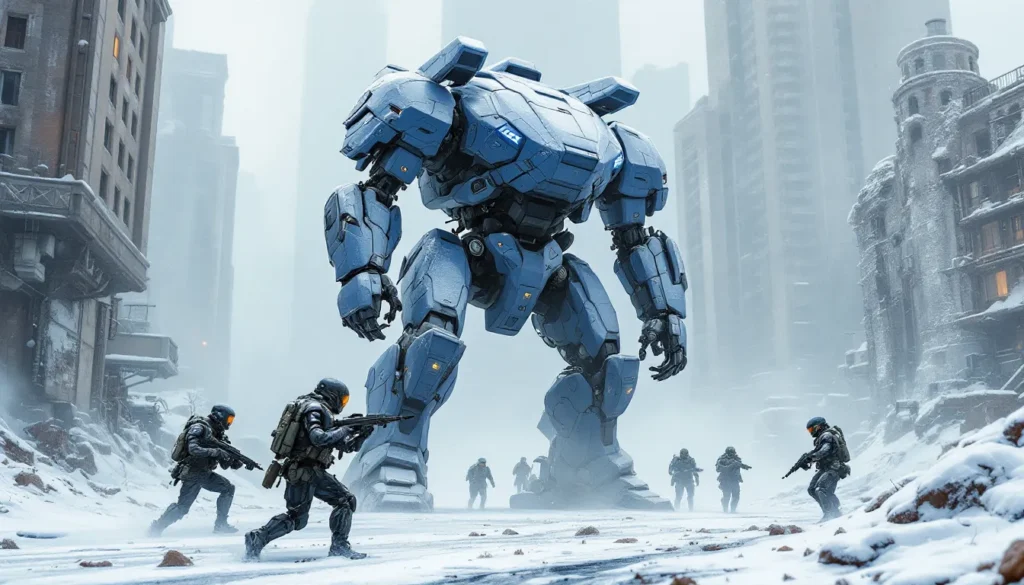
- Walkers: Bipedal mechs like the PAC’s Type 32 Nekomata and EU’s L5 Riesig, capable of infantry suppression and anti-vehicle engagements.
- Hover APCs: The PAC’s BTR-20 Yastreb and EU’s A-8 Tiger transported squads while providing mobile spawn points.
- Gunships: Transport craft that doubled as aerial fire support.
- Hoverbikes: Fast, fragile reconnaissance vehicles.
Every vehicle featured driver and gunner positions, rewarding teamwork. Walkers felt slow but devastating. APCs were mobile fortresses. Gunships dominated when air superiority was established but crumpled under focused anti-air fire.
Playable Factions: PAC vs EU
Battlefield 2142 features two playable factions locked in a global war for survival. While functionally identical in gameplay terms, their aesthetic and lore provided distinct identity.
Pan Asian Coalition (PAC)
The Pan Asian Coalition represents a unified military force spanning China, Russia, and other Asian-Pacific nations. PAC soldiers wear angular, industrial armor with blue-gray color schemes. Their vehicles emphasize angular, utilitarian designs.
Notable PAC vehicles:
- Type 32 Nekomata walker
- BTR-20 Yastreb APC
- DPV-6 Bachcha hoverbike
PAC Titans featured more compact, fortress-like interiors compared to EU counterparts. The faction’s voice lines and visual identity leaned into a cold, disciplined military aesthetic.
European Union (EU)
The European Union faction unified European nations under a single military command. EU troops wear sleeker, more modular armor in tan and green camouflage patterns. Their technology appears slightly more refined, with smoother vehicle contours.
Notable EU vehicles:
- L5 Riesig walker
- A-8 Tiger APC
- UAV-10 Arrows hoverbike
EU Titans had wider corridors and a more spacious layout, which some players found easier to navigate during boarding actions. Design differences were subtle but created a sense of faction personality beyond palette swaps.
The Four Classes and How to Master Them
Battlefield 2142 refined the class system from Battlefield 2, balancing versatility with specialization. Each class had a clear role, and effective squads needed representation from multiple classes. In the best Battlefield games, class synergy often determined match outcomes.
Assault Class: Front-Line Combat Specialist
The Assault class served as the backbone of infantry pushes. Armed with assault rifles and rocket launchers, Assault players excelled at clearing objectives and engaging light vehicles.
Primary weapons: Baur H-AR, Krylov FA-37, SCAR 11
Gadgets:
- Rocket Launcher: Dumbfire anti-vehicle weapon effective against walkers and APCs at medium range.
- Defibrillator: Revive fallen teammates for full health.
- Smoke Grenades: Obscure sightlines during advances.
Playstyle tips: Assault thrived in medium-range engagements. The rocket launcher’s slow reload meant picking shots carefully against vehicles. Defibs turned aggressive Assault players into field medics, reviving teammates mid-firefight could swing objective captures.
Unlock priority: Advanced assault rifles with better accuracy, improved rocket velocity, and enhanced defibrillator range.
Recon Class: Stealth and Intelligence Operations
The Recon class combined long-range lethality with intelligence-gathering tools. Snipers and infiltrators both fell under this umbrella, making Recon the most versatile class.
Primary weapons: Park 52 sniper rifle, Lambert Carbine, Zeller-H Advanced Sniper Rifle
Gadgets:
- Active Camouflage: Optical cloaking that rendered players nearly invisible when stationary.
- RDX Demopak: Remote-detonated explosives for ambushes and sabotage.
- Motion Sensors: Deployable sensors revealing enemy movement on the minimap.
Playstyle tips: Recon wasn’t just about camping hilltops. Active camo allowed infiltrators to slip behind enemy lines, plant RDX on Titan consoles, or spot flanking maneuvers. Motion sensors placed near objectives gave squads critical intel.
Unlock priority: Advanced sniper rifles with better zoom and reduced sway, improved cloaking duration, and enhanced motion sensor range.
Engineer Class: Vehicle Support and Repairs
The Engineer class kept armor rolling and neutralized enemy vehicles. Engineers were essential in vehicle-heavy maps and Titan defense.
Primary weapons: SCAR-11 Carbine, Turcotte Rapid SMG
Gadgets:
- Repair Tool: Restore vehicle health and repair Titan consoles.
- Anti-Vehicle Mines: Deploy up to five mines that detonate on contact.
- EMP Grenades: Temporarily disable vehicles and equipment.
Playstyle tips: Engineers maximized effectiveness by sticking with friendly armor. A walker with a dedicated Engineer repair buddy became exponentially harder to kill. On Titan defense, Engineers repaired damaged consoles under fire, extending the ship’s lifespan.
Unlock priority: Improved repair tool efficiency, increased mine capacity, and advanced SMGs for close-quarters defense.
Support Class: Ammunition and Squad Assistance
The Support class sustained prolonged engagements by resupplying ammunition and deploying defensive equipment.
Primary weapons: Bianchi FA-6 LMG, Ganz HMG, Mitchell heavy machine gun
Gadgets:
- Ammo Hub: Deployable station that restocks teammates’ ammunition and grenades.
- Sentry Guns: Automated turrets that engaged enemies within range.
- EMP Grenades: Shared with Engineer.
Playstyle tips: Support excelled at holding chokepoints. An LMG with sustained fire suppressed enemy advances while ammo hubs kept defenders stocked. Sentry guns placed in Titan corridors or near capture points added automated firepower.
Unlock priority: Advanced LMGs with larger magazines, improved sentry gun health and targeting, and enhanced ammo hub resupply speed.
Maps and Game Modes Worth Exploring
Battlefield 2142 shipped with 10 maps at launch, later expanded through the Northern Strike booster pack. Map design emphasized multi-layered combat with infantry corridors, vehicle lanes, and strategic control points.
Iconic Maps: From Suez Canal to Minsk
Suez Canal: A desert map featuring the remains of a dried-up canal. Vehicle combat dominated the center while infantry fought through industrial complexes on the flanks. Walkers excelled here due to open sightlines.
Minsk: Urban warfare in a frozen European city. Tight streets and collapsed buildings created close-quarters engagements. APCs served as mobile spawn points while infantry cleared buildings floor by floor.
Gibraltar: A narrow, chokepoint-heavy map set around the historic strait. The elevated fortress in the center became a brutal tug-of-war. Titan mode on Gibraltar forced aggressive silo captures due to limited space.
Verdun: Named after the WWI battlefield, this map featured trenches, bunkers, and frozen forests. Combat ranged from sniper duels across no-man’s land to shotgun brawls in underground tunnels.
Shuhia Taiba: A North African map with a massive canal running through the center. Bridges became critical chokepoints, and controlling the canal’s elevated positions granted defensive advantages.
The Northern Strike expansion added:
- Highway Tampa: Vehicle-focused combat along a multi-lane highway.
- Molokai: Tropical island warfare with beach landings and jungle combat.
- Port Bavaria: Industrial port with tight urban sections and warehouse firefights.
Conquest Mode and Strategic Gameplay
Conquest mode translated directly from earlier Battlefield titles. Teams fought to capture and hold control points scattered across the map. Holding more points drained the enemy’s reinforcement tickets faster.
Strategic depth came from spawn points. Captured flags served as respawn locations, meaning teams could flank by securing rear objectives. Squad leaders with proper unlocks could also deploy mobile spawn beacons.
Vehicle spawns tied to specific control points. Losing the flag meant losing access to that walker, APC, or gunship until recapture. Many players found the Battlefield franchise’s evolution impressive, as each entry refined conquest mechanics.
Ticket bleed rates varied by server settings, but typical 64-player matches lasted 25-35 minutes. Comebacks required coordinated pushes, capping multiple flags simultaneously to reverse ticket drain.
Can You Still Play Battlefield 2142 in 2026?
EA shut down official Battlefield 2142 servers on June 30, 2014, as part of the GameSpy server closure. For years, the game sat unplayable without community intervention.
Official Server Status and Community Revival Projects
No official servers exist as of 2026. EA has not re-released or remastered Battlefield 2142. Physical copies and digital purchases through Origin no longer function for multiplayer without third-party tools.
But, dedicated community projects revived the game:
Project Remaster (formerly known as BF2142 Reclamation): A fan-run initiative that hosts dedicated servers and provides patched executables. Players download a modified client that bypasses EA’s defunct authentication servers and connects to community-hosted instances.
Novgame Network: Another community server network supporting both vanilla and Northern Strike content. Population fluctuates but maintains a small, active player base during peak hours.
How to Install and Play Using Community Tools
Playing Battlefield 2142 in 2026 requires several steps:
-
Obtain the game files: Physical discs still work, or search for archived digital versions. Some community projects provide pre-patched installer bundles.
-
Install the base game: Run the installer and apply the official 1.51 patch (the final official update from DICE).
-
Download community patch: Visit Project Remaster or Novgame Network websites and download their custom executable and server browser.
-
Replace game executable: Overwrite the original BF2142.exe with the community-patched version.
-
Launch and connect: Use the community server browser to find active matches. Player counts are modest, expect 20-40 players during weekends.
Technical notes: Modern operating systems (Windows 10/11) require compatibility mode settings. Run BF2142.exe in Windows 7 compatibility mode and disable fullscreen optimizations. Some users report needing to whitelist the executable in antivirus software.
Population peaks on Friday and Saturday evenings (EU and NA time zones). Titan mode servers remain the most populated, though Conquest-only servers occasionally fill up. According to tracking from dedicated community hubs, player counts hover between 100-200 concurrent users globally during peak periods.
Why Battlefield 2142 Remains a Cult Classic
Two decades after release, Battlefield 2142 maintains a devoted following even though no official support and a completely player-run infrastructure. Several factors explain its enduring appeal.
Innovation in Multiplayer Design
Titan mode has never been replicated with the same level of execution. Later Battlefield titles experimented with dynamic objectives, Carrier Assault in Battlefield 4’s Naval Strike DLC came closest, but none captured the same intensity.
The seamless transition from outdoor conquest to indoor objective assault created emergent gameplay moments. Squads coordinating ground silo captures while others prepared boarding parties felt like actual combined arms tactics. Defenders scrambling to repair consoles while enemies breached the hull generated cinematic tension without scripted events.
The unlock system struck a balance between progression and accessibility. Veterans had advantages, but skilled new players could still contribute. Unlocks felt meaningful without creating insurmountable power gaps, a lesson some modern shooters still struggle with.
Sci-fi setting freed DICE from historical accuracy constraints. Walkers, hovering APCs, and energy weapons introduced gameplay mechanics impossible in WWII or modern settings. The creative freedom showed in map design, where futuristic infrastructure allowed for vertical combat and unconventional layouts. Outlets like IGN praised the game’s willingness to experiment with the formula established in earlier entries.
Legacy and Influence on Modern Battlefield Titles
Battlefield 2142’s DNA appears throughout later franchise entries, even as the series returned to historical and modern settings.
Battlefield 3 and 4 inherited the unlock progression system. Weapon attachments, class-specific gadgets, and specialization trees all trace back to 2142’s framework.
Battlefield 2042 (even though the naming similarity) attempted to recapture some of 2142’s futuristic aesthetic with its near-future setting and specialist system. The game’s poor reception highlighted how much players missed the class-based balance 2142 nailed.
Titan mode’s influence extended beyond Battlefield. Games like Planetside 2, Star Wars Battlefront II (2017), and even Apex Legends’ limited-time modes borrowed the concept of destructible mobile command centers.
The community-driven resurrection also demonstrated the demand for legacy content preservation. Fan projects kept 2142 alive longer than many AAA titles with official support. Gaming media outlets including GameSpot have covered community revivals as examples of grassroots game preservation.
Nostalgia plays a role, but 2142’s staying power comes from design choices that aged well. 64-player battles still feel large-scale. Class interdependence still rewards teamwork. Vehicle-infantry balance still creates dynamic engagements. The game didn’t rely on annual content drops or battle passes, it shipped complete and let players extract value through mastery.
Some fans argue 2142 represented the franchise’s peak innovation before the modern era’s focus on monetization and seasonal content. Whether that’s rose-tinted nostalgia or legitimate critique, it explains why players still boot up community servers in 2026 to defend Titans and capture silos.
Conclusion
Battlefield 2142 took risks that paid off. Swapping historical warfare for a frozen future, introducing Titan mode, and refining class-based progression created an entry that still influences multiplayer shooters today. The fact that players maintain community servers and revival projects in 2026, 12 years after official support ended, speaks to the game’s lasting impact.
If you’ve never experienced storming a Titan’s reactor core while the ship crumbles around you, or piloting a walker through the ruins of Minsk, the community revival projects offer a chance to see what made this cult classic special. The player base is smaller, the graphics are dated, and you’ll need some technical workarounds to get it running. But for those willing to put in the effort, 2142 still delivers large-scale combined arms combat with a flavor the franchise hasn’t quite recaptured.
Whether EA ever revisits this setting officially remains speculation. Until then, the PAC and EU continue their frozen war on community servers, kept alive by players who refuse to let this chapter of Battlefield history fade away.