Table of Contents
ToggleVerdun stands apart from the typical FPS crowd. No aim-assist chaos, no regenerating health, no sprinting across the map with a golden sniper rifle. Instead, you’re crawling through mud, waiting for artillery to stop screaming overhead, and hoping the guy next to you remembers to put on his gas mask. This is World War 1 at its grittiest, a squad-based shooter that throws you into the meat grinder of trench warfare and asks if you’ve got what it takes to survive.
Whether you’re fighting on the historical Verdun battlefield or any of the game’s meticulously crafted maps, success comes down to understanding the brutal tempo of early 20th-century combat. This isn’t a run-and-gun affair. It’s methodical, punishing, and deeply rewarding once the mechanics click. This guide breaks down everything you need to know: map layouts, class strategies, loadout optimization, and the advanced tactics that separate veterans from cannon fodder.
Key Takeaways
- Verdun stands out as a historically authentic squad-based FPS that prioritizes teamwork and tactical positioning over individual reflexes and fast-paced gunplay.
- Success on the Verdun battlefield requires mastering trench navigation, understanding squad roles, and timing coordinated attacks with your NCO’s strategic callouts rather than playing solo.
- Bolt-action rifles, stamina management, and careful positioning determine survival—missing one shot or exposing yourself for two seconds can mean instant death from snipers or machine gun fire.
- Defensive strategies rely on overlapping fields of fire and covering flanking routes through communication trenches, while offensive pushes demand staggered entry points and coordinated grenade placement.
- Avoiding common mistakes like ignoring squad orders, standing still in the open, and overextending without team support transforms your Verdun performance from rookie to veteran.
What Makes Verdun Battlefield Unique in Modern Gaming
Historical Authenticity Meets Gameplay
Verdun doesn’t just reference World War 1, it recreates it. Developer M2H and BlackMill Games built the game around authentic squad compositions, period-accurate weapons, and actual battlefield tactics from the Western Front. Every rifle, every uniform, every trench layout pulls from historical records. The Battle of Verdun itself lasted 303 days in 1916, becoming one of the longest and deadliest engagements in human history, and the game captures that grinding, attritional nature.
Unlike most shooters that use history as window dressing, Verdun makes authenticity a core mechanic. Bolt-action rifles dominate because that’s what soldiers carried. Artillery barrages force you into cover because standing in the open meant death. Gas attacks require actual counter-play with masks, not just a health debuff you can ignore. The result is a shooter that feels fundamentally different from anything else on the market, slower, deadlier, more cerebral.
How Verdun Differs from Battlefield and Other FPS Titles
If you’re coming from Battlefield or Call of Duty, expect whiplash. Verdun strips away most of the power fantasy elements that define modern military shooters. There’s no minimap constantly feeding you intel. No kill streaks. No weapon customization with 47 attachment slots. You pick a squad type, get issued historically appropriate gear, and make it work.
The TTK (time-to-kill) is brutally fast, one or two shots from most rifles will drop you. But the bolt-action reload cycle creates a rhythm completely foreign to automatic-weapon spray-and-pray. Miss your shot, and you’re cycling the bolt while someone else lines up on you. Movement is deliberately methodical: sprinting drains stamina fast, and your weapon sway increases dramatically when exhausted.
Squad mechanics matter more here than in almost any other FPS. Your NCO (non-commissioned officer) calls attacks and defenses, and following those orders gives the entire squad tactical buffs. Ignore the plan and run off solo? You’ll die alone in no man’s land while your team loses the sector. Recent discussions on gaming community platforms highlight how this squad-centric design creates a completely different meta from traditional team deathmatch shooters.
Understanding the Verdun Battlefield Map Layout
Key Sectors and Strategic Points
Verdun’s maps are divided into sectors, distinct territorial zones that teams must capture and hold in sequence. Each sector contains multiple capture points, typically trench lines, bunkers, or fortified positions. The attacking team needs to secure all points in a sector before the timer runs out: defenders win by running down the clock or wiping out attackers.
The Verdun Heights map, for instance, features five distinct sectors ranging from the forward observation posts to the heavily fortified rear trenches. Middle sectors often have the most complex trench networks with multiple flanking routes, while the final defensive sectors compress into tighter, more defensible positions. Knowing which routes lead where, and which trenches connect to others, gives you a massive tactical edge.
Pay attention to elevated positions. Even slight height advantages let you see over trench parapets and spot enemy movement. Crater fields in no man’s land offer scattered cover but create unpredictable sightlines. Some sectors include bunkers with thick overhead cover, essential during artillery strikes but vulnerable to grenade spam if enemies get close.
Trench Systems and No Man’s Land Navigation
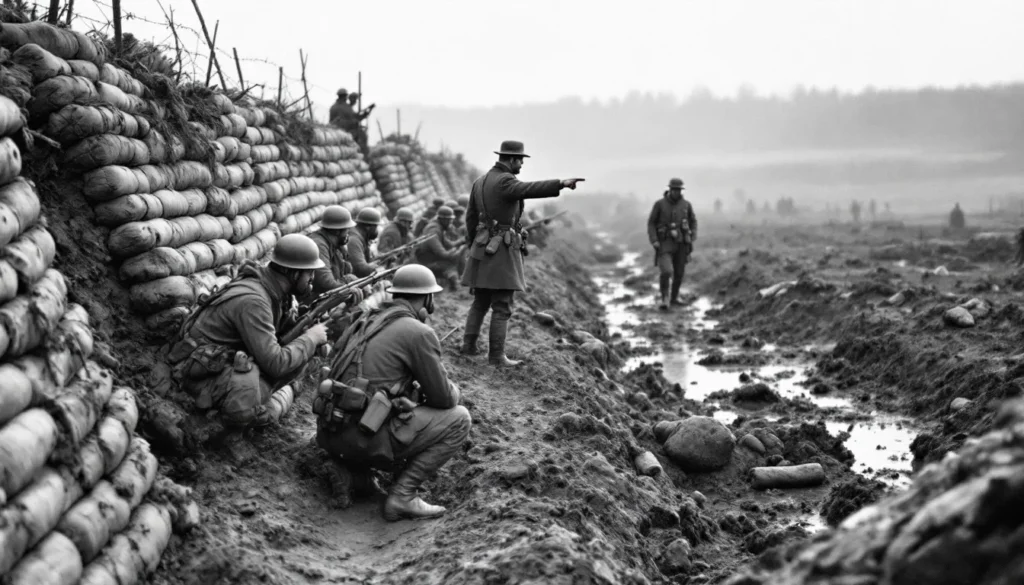
The trench networks in Verdun aren’t just cosmetic, they’re survival tools. Communication trenches run perpendicular to the front line, letting you move between sectors with some cover. Fire trenches face the enemy and offer firing steps to shoot from. Support trenches run parallel to the front but further back, serving as fallback positions.
Navigating no man’s land is where most new players die. Don’t just sprint straight at the objective. Use shell craters for cover, move during artillery barrages when enemies are suppressed, and watch for wire obstacles that slow movement and make you an easy target. The terrain is deliberately chaotic, churned earth, destroyed trees, scattered bodies, and visibility drops significantly in fog or gas.
Smart players memorize the trench entrance points for each sector. Getting caught outside during a sustained firefight is a death sentence. If you’re attacking, identify which trench segments lead deepest into enemy territory. If defending, know which approach routes you need to cover and where enemies will likely emerge from no man’s land. The map isn’t randomly generated chaos, it follows historical trench warfare logic, and learning that logic is half the battle.
Best Classes and Loadouts for Verdun Battlefield
Offensive vs. Defensive Class Selection
Verdun organizes classes into squad types, each representing historical national forces with distinct roles. Within each squad, you’ll find specialists: riflemen, grenadiers, machine gunners, scouts, and more. Your role dictates your loadout, and your squad type determines available options.
For offensive pushes, assault-focused squads like the German Stoßtruppen (Stormtroopers) excel. These squads get access to semi-automatic rifles, close-range weapons, and extra grenades, perfect for clearing trenches. The rifleman and assault infantry roles within these squads carry weapons like the Selbstlader 1906 or MP 18, which offer higher fire rates than standard bolt-actions.
For defensive holds, squads with strong machine gun and sharpshooter options dominate. The French Poilu or British Tommies work well here. The machine gunner class can set up a Maxim MG 08/15 or Hotchkiss M1909 in a trench and create a nearly impassable killing zone when positioned correctly. Pair that with rifle grenadiers who can lob explosives at approaching enemies, and you’ve got a defensive fortress.
The NCO role deserves special mention. The NCO can’t be the best fragger, but they control squad-wide buffs and tactical callouts. A good NCO times attacks when artillery support is available and calls defensive stands in sectors with strong cover. Play NCO if you understand map flow and can read when to push or dig in.
Weapon Recommendations for Each Combat Role
Rifleman roles typically carry bolt-action rifles, the Gewehr 98, Lebel 1886, or Lee-Enfield SMLE. These are one-shot-kill machines at range but require precision. The Gewehr 98 has slightly better accuracy and range: the SMLE has the fastest bolt cycle. Pick based on whether you’re engaging at medium or long distance.
Grenadiers and assault troops get the fun toys. The MP 18 Bergmann is the gold standard for trench clearing, manageable recoil, decent mag size, and devastating at close range. The RSC 1917 semi-auto rifle offers a middle ground: faster follow-up shots than bolt-actions but lower capacity. Use it for medium-range engagements where you need quick target transitions.
For machine gunners, the MG 08/15 dominates when bipod-deployed. Set up covering a long trench segment or no man’s land approach, and you can single-handedly halt an offensive. Just remember: you’re immobile while deployed, and repositioning is slow. The Chauchat is lighter and more mobile but less stable, better for aggressive positions where you might need to relocate.
Scouts and sharpshooters should prioritize the Gewehr 98 Sniper or Mosin-Nagant Sniper variants. These offer magnified optics for long-range picks, crucial for disrupting enemy formations before they reach your trenches. In recent gaming reviews, players noted the importance of sharpshooter roles in breaking defensive stalemates by picking off enemy NCOs and machine gunners.
Sidearms rarely matter, you’ll almost never have time to switch in a gunfight. Grenades, but, are gold. Stick grenades and Mills bombs can clear a trench segment or bunker entrance instantly. If your class gets grenades, use them liberally when attacking fortified positions.
Advanced Tactics and Strategies for Dominating Verdun
Mastering Trench Warfare Movement
Movement in Verdun is about patience and timing, not reflexes. When advancing through trenches, slice the pie, expose yourself gradually around corners rather than sprinting into the open. Most trench segments have blind corners where enemies camp, and peeking incrementally lets you spot them before they get a clean shot.
Stamina management is critical. Sprinting depletes stamina fast, and low stamina increases weapon sway and reduces melee effectiveness. Don’t sprint everywhere. Use it for short bursts across exposed ground, then let it regenerate in cover. Exhausted players lose gunfights they should win because their sights are wobbling all over the place.
Learn to quick-peek over trench parapets. Crouch behind cover, stand briefly to scan no man’s land, then duck immediately. Staying exposed even for two seconds invites sniper fire. When you spot movement, track it while in cover, then pop up with your rifle already aimed at the predicted position.
Coordinating Squad Attacks and Defenses
Listen to your NCO. When the attack order comes, the entire squad gets a temporary buff, reduced suppression effects, faster movement, and clearer vision. Attacking outside this window means fighting without those advantages. Conversely, when the NCO calls a defense, holding the designated sector gives similar defensive bonuses.
Communication transforms average squads into dominant ones. Call out enemy positions using sector landmarks: “MG in the left bunker,” “sniper on the ridge,” “gas incoming from the center.” Most deaths happen because teammates don’t know where threats are coming from.
When attacking, stagger your squad’s approach. Don’t all funnel through the same trench entrance, enemies will just lob grenades and wipe everyone. Hit multiple entry points simultaneously. Have your machine gunner suppress one side while riflemen and assault troops push the opposite flank. Coordinate grenade throws to clear bunkers before entering, not after you’re already pinned.
On defense, create overlapping fields of fire. Position the machine gunner covering the most likely approach, with riflemen covering the flanks. Have at least one player watching the communication trenches for flanking attempts. Defensive positions fall because enemies slip through an unwatched route and collapse the defense from behind.
Gas Attacks and Counter-Strategies
Gas grenades and artillery gas barrages turn sectors into death zones. Gas depletes health rapidly, and staying in it without a mask means death in seconds. But gas also creates tactical opportunities if you know how to exploit it.
When you see gas incoming, put on your mask immediately, don’t wait until you’re already taking damage. The mask protects you but restricts peripheral vision and muffles audio cues. This makes close-quarters combat riskier, so avoid pushing into tight spaces during gas unless necessary.
Offensively, use gas to force defenders out of strong positions. A well-placed gas grenade in a trench segment either kills defenders or forces them to retreat, opening gaps for your squad to exploit. Coordinate gas attacks with pushes, throw gas, wait five seconds for it to spread, then move in while defenders are scrambling for masks or relocating.
Defensively, fall back from gassed sectors rather than fighting blind. Let the gas dissipate (it clears after 20-30 seconds), then retake the position. Trying to hold a gassed trench against attackers who timed their push correctly is suicide. Tech discussions on gaming news outlets have covered how gas mechanics in Verdun create a unique risk-reward dynamic absent in most modern shooters.
Common Mistakes to Avoid on Verdun Battlefield
Ignoring squad orders is the number one rookie error. Playing Verdun like a solo deathmatch shooter gets you killed and loses matches. When your NCO calls an attack, you push with the squad. When they call defense, you hold position. The buffs from coordinated actions make a tangible difference in firefights.
Standing still in the open is the second fastest way to die (after standing still in gas). Even if you don’t see enemies, assume a sniper is scanning for stationary targets. Keep moving between cover points. When firing, take your shots then relocate, don’t camp the same firing position for extended periods.
Reloading at the wrong time will get you killed mid-animation. Verdun uses realistic reload mechanics, bolt-actions require cycling after each shot, magazine reloads interrupt completely if you need to fire. Reload during lulls in combat, not when you hear footsteps approaching. Better to have three rounds ready than zero because you started a reload as an enemy turned the corner.
Sprinting into no man’s land without cover planning is suicide. Identify your next cover point before leaving your current one. Shell craters, wire obstacles, and destroyed terrain offer concealment, use them. Sprinting in a straight line from your trench to the enemy trench is how you end up as another corpse in the mud.
Not watching your flanks during intense firefights leads to embarrassing deaths. Tunnel vision on the enemy in front of you while someone flanks through a communication trench and shoots you in the side. Periodically check your flanks, especially if you’ve been engaged in a long-range duel.
Overextending on offense is tempting when you’re on a roll, but pushing too far ahead of your squad leaves you isolated. If you capture a point before your teammates arrive, you’re alone defending it against the inevitable counterattack. Wait for squad cohesion before pushing the next sector.
Forgetting about artillery gets entire squads wiped. When you hear the whistle and see the warning indicator, get into hard cover immediately, bunkers, dugouts, deep trenches. Overhead cover saves lives. Standing in open trenches during artillery is only marginally better than standing in no man’s land.
Graphics Settings and Performance Optimization
Best Settings for Competitive Play
Verdun isn’t graphically demanding by modern standards, but optimizing settings can improve visibility and maintain stable framerates during intense firefights with smoke, gas, and artillery effects.
View Distance should stay at maximum or high. Spotting distant enemies is crucial, and reducing view distance handicaps your ability to see threats across no man’s land. This is one setting you don’t want to compromise on.
Texture Quality can be medium without significant visual loss. High and ultra textures look marginally better but eat VRAM and provide no competitive advantage. Muddy trenches look muddy regardless.
Shadow Quality is a trade-off. Shadows help identify enemy positions (spotting movement in shadowed trench segments), but lower settings improve performance. Medium offers a good balance, enough shadow detail to spot movement without tanking framerates.
Effects Quality controls particle density for explosions, gas, and muzzle flashes. Lower settings reduce visual clutter during artillery barrages, making it easier to track enemies through chaos. Competitive players often run this at low or medium.
Anti-Aliasing smooths jagged edges but costs performance. FXAA offers the best performance-to-quality ratio. TAA looks better but introduces slight blur. If you’re chasing high framerates, FXAA or off is the way to go.
Target 60 FPS minimum on PC. The game is playable at lower framerates, but bolt-action precision shooting benefits from smooth frame delivery. If you’re dropping below 60 during heavy action, lower effects quality and shadow quality first.
Platform-Specific Tips (PC, Console)
PC players should prioritize frame stability over max graphics. Verdun supports uncapped framerates, so if your rig can push 100+ FPS, take advantage, the improved input responsiveness helps with quick target acquisition. Use V-Sync only if you experience screen tearing: otherwise, leave it off for lower input lag.
Mouse sensitivity matters more in Verdun than twitch shooters because precision counts. Most players settle between 400-800 DPI with in-game sensitivity around 30-50%. You want smooth, controlled movements for bolt-action headshots, not flick-heavy tracking.
Console players (PS4, Xbox One, and newer gens) deal with locked graphics settings but can optimize controller sensitivity. Increase ADS (aim-down-sights) sensitivity slightly above default to track moving targets more effectively. The default is sluggish for the pace of trench combat.
Enable motion blur off if available. It looks cinematic but reduces clarity during quick turns, making it harder to spot enemies in peripheral vision.
Console performance typically targets 30 FPS, which is playable but noticeably less smooth than PC. If you’re on PS5 or Xbox Series X/S, check for performance modes or enhanced backwards compatibility features that might unlock higher framerates.
Community Tips and Pro Player Insights
The Verdun community, while smaller than mainstream FPS titles, has developed deep tactical knowledge over the game’s lifespan. Veterans emphasize a few core principles that separate experienced players from newcomers.
Weapon sway control is something many players ignore. Holding your breath (typically bound to Shift on PC, L3 on console) steadies your aim dramatically. Use it for every aimed shot beyond close range. The difference between a steady shot and a swaying one is often the difference between a kill and alerting the enemy to your position.
NCO rotation within squads keeps things dynamic. Don’t let the same player run NCO every round if they’re not effectively timing orders. A passive NCO who never calls attacks wastes the squad’s offensive potential. Rotate the role to players who understand map flow and can read when the team has momentum.
Flanking routes on specific maps become well-known at higher skill levels. On Douaumont, the right-side communication trench on sector three offers a fast route behind enemy lines if undefended. On Piave, the riverbank approach bypasses the main defensive line. Learn these routes, and more importantly, defend them when you’re holding sectors.
Audio cues carry enormous information. Bolt-action rifles have distinct sounds by nation. Learn to differentiate German Gewehr 98 shots from British Lee-Enfield shots. This tells you which squad types you’re facing and what weapons to expect. Footsteps indicate enemy proximity, if you hear running, someone’s close.
Spawn timing awareness helps predict enemy numbers. After wiping an enemy squad, you typically have 10-20 seconds before they respawn and return to the front. Use this window to push aggressively or secure objectives before they can reorganize.
Melee isn’t worthless, even though what some players think. If you’re in a trench segment and out of ammo with an enemy right in front of you, a bayonet charge or shovel swing is faster than reloading. It’s situational, but knowing when to close distance and melee can save your life.
Experienced players also recommend playing with a consistent squad when possible. Verdun rewards teamwork and communication far more than individual skill. A coordinated squad of average players will dominate a team of skilled solo players running around independently. Use voice chat, call out targets, and coordinate pushes.
Conclusion
Verdun doesn’t hold your hand. It throws you into the chaos of World War 1 trench warfare and expects you to adapt or die repeatedly. But once the mechanics click, once you understand squad tactics, map layouts, weapon handling, and the brutal rhythm of attack and defense, few shooters offer a more rewarding experience.
Success on the Verdun battlefield comes down to patience, positioning, and teamwork. Master the trench systems, coordinate with your squad, pick the right class for the situation, and avoid the common mistakes that get rookies killed. This isn’t a game where you carry matches through raw aim alone. It’s a tactical puzzle where every decision, from when to reload to which trench entrance to use, matters.
The learning curve is steep, but that’s exactly why breaking through feels so good. See you in the trenches.