Table of Contents
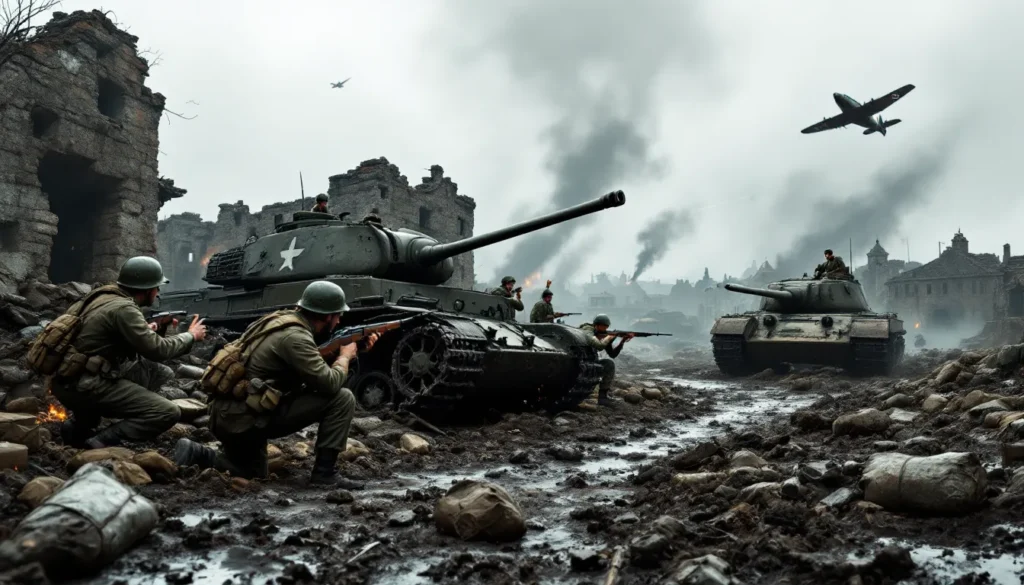
ToggleWorld War 2 has defined an entire era of military shooters, and no franchise captures its scale and chaos quite like Battlefield. From the storming of Normandy beaches to desperate tank battles across the Eastern Front, WW2 Battlefield games deliver visceral combined-arms combat that few other titles can match. Whether you’re parachuting into Rotterdam or holding a frozen trench against Soviet armor, these games demand more than quick reflexes, they require tactical thinking, squad coordination, and an understanding of how infantry, vehicles, and air support interact on a massive scale.
This guide covers everything players need to dominate WW2 Battlefield titles, particularly Battlefield V, which remains the franchise’s most recent historical entry. From class loadouts and weapon meta to vehicle tactics and map-specific strategies, we’ll break down what separates effective players from cannon fodder. The WW2 setting isn’t just nostalgia, it’s a proving ground for combined-arms skill that translates across the entire franchise.
Key Takeaways
- WW2 Battlefield games distinguish themselves through large-scale combined-arms combat featuring destructible environments, iconic vehicles, and squad-based coordination that demands tactical thinking beyond reflexes.
- Battlefield V’s Pacific Theater expansion, especially the Iwo Jima map, represents the franchise’s best WW2 content despite its rocky 2018 launch, with 19 maps spanning European, African, and Pacific theaters by final update.
- Master class roles—Assault for anti-tank, Medic for revives and healing, Support for suppression and ammo, Recon for spawns and long-range support—as coordinated squads outperform individual players regardless of kill/death ratio.
- Vehicle warfare dominates WW2 Battlefield strategy; position tanks defensively with infantry support, manage armor zones to avoid rear exposure, and coordinate air superiority to suppress enemy armor and clear objectives.
- Objective play and map control win matches through ticket bleed, not individual kills; prioritize squad spawns near flags, defend captured objectives, and avoid lone-wolfing to leverage Battlefield’s interconnected systems for victory.
- Avoid common mistakes like ignoring vehicles, poor positioning, neglecting weapon specializations, and tunnel-vision gameplay; instead, maintain battlefield awareness through minimap usage and audio cues while adapting tactics to map design and team composition.
What Makes WW2 Battlefield Games So Compelling?
Authentic Historical Immersion
WW2 Battlefield games nail the atmosphere of history’s largest conflict. Bolt-action rifles crack across snow-covered fields. Stukas scream overhead before releasing their payload. Flamethrowers roar through bunker corridors while MG42s tear through advancing infantry.
Battlefield V (released November 2018) brought this immersion to a new level with its Frostbite engine. Destructible environments mean cover degrades as firefights intensify. A building that sheltered your squad at the round’s start might be rubble ten minutes later. The game launched with eight maps spanning Norway, France, North Africa, and the Netherlands before expanding through its Tides of War live service.
The audio design deserves special mention. Each weapon has a distinct report that experienced players can identify instantly. The Gewehr 43’s sharp crack differs noticeably from the M1 Garand’s ping. Tank shells create concussive blasts that momentarily disorient players caught in the blast radius. It’s sensory overload in the best possible way.
Iconic Weapons and Vehicle Warfare
WW2’s arsenal remains one of gaming’s most satisfying to master. The STG 44 assault rifle bridged the gap between submachine guns and full-power rifles in real history, and it serves the same role in Battlefield V. The Kar98k bolt-action might seem slow compared to modern weapons, but landing headshots at 200 meters never gets old.
Vehicle combat defines Battlefield’s identity. A skilled tanker in a Tiger I can lock down entire sectors, forcing infantry to coordinate AT assaults. Spawn a Spitfire and suddenly you’re dueling a BF 109 at 3,000 feet while your team pushes objectives below. Every vehicle class requires different skills, tanks demand positioning awareness, planes need lead calculation and energy management, and transport vehicles are about getting squads where they’re needed most.
The interplay between infantry and vehicles creates Battlefield’s signature moments. That desperate Panzerfaust shot that stops a tank push. The bombing run that clears an objective seconds before your team caps it. The enemy pilot you’ve been hunting finally going down in flames. These aren’t scripted, they emerge organically from the game’s systems.
The Evolution of WW2 Battlefield Titles
From Classic Releases to Modern Iterations
The franchise’s relationship with WW2 stretches back to its origins. Battlefield 1942 (2002) launched the series with its WW2 setting across Pacific, European, and African theaters. It introduced the DNA that still defines Battlefield: large-scale maps, multiple vehicle types, and class-based infantry combat. Mods like Desert Combat proved the community’s appetite for expanding the formula.
Battlefield 1943 (2009) arrived as a downloadable title, streamlining the experience for console audiences. Its three maps, Wake Island, Guadalcanal, and Iwo Jima, focused exclusively on Pacific theater combat. The game served as a testing ground for Frostbite destruction that would define future entries.
Meanwhile, players seeking comprehensive guides to Battlefield for Beginners can find fundamental mechanics that carry across both historical and modern settings. The franchise has always rewarded tactical thinking over pure twitch aim.
Battlefield V’s WW2 Setting and Reception
Battlefield V’s launch in November 2018 was rocky. DICE chose to emphasize lesser-known WW2 battles in its initial content, the Norwegian heavy water sabotage, the North African campaign, and the French resistance. Some players wanted the iconic moments first: D-Day, Stalingrad, Battle of the Bulge.
The game launched with bugs and incomplete features. Dragging downed teammates didn’t work properly. Assignments were confusing. Vehicle spawning felt off. But DICE stuck with it, and by late 2019, Battlefield V had found its footing. The Pacific Theater expansion (Chapter 5, October 2019) brought Iwo Jima and the Pacific Storm, complete with US and Japanese factions that fans had been demanding.
Post-launch support continued through 2020, adding the Eastern Front’s Battle of Stalingrad and expanding weapon variety. The final update landed in summer 2020, leaving Battlefield V with 19 maps spanning the entire war’s scope. While it never reached Battlefield 3 or 4’s legendary status, it remains the definitive modern WW2 Battlefield experience.
Player counts on PC hover around 10,000-15,000 concurrent players as of 2026 (via unofficial trackers), with healthy console populations. Community servers keep niche modes and map rotations alive.
Essential Maps and Theaters of War
Western Front: D-Day and Beyond
Twisted Steel showcases France’s countryside, featuring the series’ longest bridge as a central chokepoint. Teams fight for control while tanks maneuver through villages and aircraft strafe supply lines. The bridge itself becomes a death trap when enemy armor locks it down, forcing squads to flank through the surrounding fields.
Arras delivers classic tank warfare across French farmland. The open terrain favors vehicles, but infantry can use the town’s buildings and hedgerows for cover. Conquest matches often devolve into armor columns trading shells across wheat fields while planes dive-bomb anything that moves.
Provence (added July 2019) shrinks the scale for intense close-quarters infantry combat. The French village’s tight corners and multi-story buildings make SMGs and shotguns dominant. It’s designed for Squad Conquest and smaller modes where every room might hide an enemy squad.
The Western Front maps emphasize combined arms. Success requires coordination between ground forces, armor, and air support. Rush one objective without backup and you’ll get shredded by defenders.
Eastern Front: The Brutal Soviet Campaign
Devastation drops players into the ruins of Rotterdam. Shattered buildings create vertical combat opportunities, with Recons holding upper floors while Assault classes clear basements. The cathedral’s bell tower serves as a sniper’s paradise, until enemy bombers reduce it to rubble.
While Battlefield V’s Eastern Front content arrived late in its lifecycle, Aerodrome captures North African desert warfare with wide-open spaces punctuated by hangar complexes. The map’s openness makes positioning crucial. Get caught sprinting across the airfield without smoke cover and you’re done.
Many players compare the best Battlefield game entries based on their map design, and the Eastern Front’s late addition meant it never got the depth it deserved. Stalingrad arrived in 2020 but felt rushed compared to Pacific content.
Pacific Theater: Island Warfare
Iwo Jima is Battlefield V’s masterpiece. US forces storm the black sand beaches while Japanese defenders rain hell from Mount Suribachi’s caves and bunkers. Early objectives favor defenders heavily, attackers need smoke grenades, tank support, and coordinated pushes to break through. Later sectors shift to cave fighting where shotguns and flamethrowers dominate.
Pacific Storm centers on island-hopping naval warfare. Teams control small islands connected by bridges and water, with patrol boats and landing craft ferrying infantry between objectives. The B sector’s radar station offers commanding views but becomes a magnet for artillery and air strikes.
Wake Island returns from Battlefield 1943, remastered for modern hardware. The horseshoe-shaped island creates natural flanking routes, and the central airfield becomes a constant battleground. Vehicle balance matters here, lose air superiority and your team will struggle to move.
Pacific maps introduced amphibious mechanics and faction-specific vehicles. The M4 Sherman handles differently from the Type 97 Chi-Ha, with American armor favoring toughness while Japanese tanks emphasize mobility.
Mastering Combat Classes in WW2 Battlefield
Assault Class: Close-Quarters Domination
Assault carries anti-tank responsibility and excels at objective rushing. The class gets automatic rifles and SMGs for close-to-medium range, plus Panzerfaust rockets and Anti-Tank Mines for dealing with armor.
STG 44 remains the workhorse weapon after multiple balance passes. Its 30-round magazine and controllable recoearance let you engage at ranges where SMGs fall off. Spec it for reduced horizontal recoil and faster ADS speed. Pair it with the Panzerfaust for vehicle harassment.
Alternatively, the M1907 SF shreds in CQB with its 21-round magazine and high ROF. It’s less versatile than the STG but unmatched in building clearing. Smoke grenades help you cross open ground to reach those close-quarters environments where you dominate.
Assault players should prioritize armor threats. See a tank rolling toward your team’s objective? Put two Panzerfaust shots into its rear armor. Coordinate with other Assaults to focus fire on vehicles, three rockets will kill most tanks instantly.
Medic Class: Supporting Your Squad
Medic keeps squads in the fight. You get the Medical Pouch and Medical Crate plus smoke grenades for reviving under fire. Your weapon selection is exclusively SMGs, limiting effective range but making you deadly in close quarters.
The Type 100 offers the best range for a Medic SMG, letting you engage at 30-40 meters effectively. Its 30-round mag and low recoil mean you can actually challenge mid-range targets instead of hiding until enemies close in. Spec for reduced recoil and extended magazines.
For aggressive play, the MP40 balances ROF, controllability, and ammo capacity. It’s the most forgiving SMG for players still learning recoil patterns. The Suomi KP/-31 with a 50-round drum dumps ammo at 770 RPM but kicks hard, it rewards bursting and close-range ambushes.
Your gadgets win rounds. Smoke launcher spam covers objective pushes. Medical crates keep squad HP topped off during sustained fights. The revive mechanic, holding interact to drag downed teammates to cover, distinguishes great Medics from average ones. Many Battlefield Tips focus on aggressive reviving as a skill that separates high-level players.
Support Class: Suppression and Resupply
Support feeds the team ammo and lays down suppressive fire with LMGs and MMGs. The Ammo Crate and Ammo Pouch keep teammates stocked, while gadgets like AP Mines and the Lunge Mine (a one-shot suicide anti-tank weapon) provide area denial and vehicle harassment.
Lewis Gun dominates Support loadouts. Its 47-round magazine, manageable recoil, and 540 RPM fire rate let you hold lanes and suppress enemies effectively. Spec for faster ADS and improved hip fire. The gun stays accurate while moving, unlike MMGs that require bipod deployment.
MMGs like the MG 42 pour out 1,200 RPM but you must be prone and bipodded. Find a good position overlooking an objective and deny entire approach lanes. Enemy heads popping up get instantly shredded. The lack of mobility makes you vulnerable to flankers and snipers though.
Place ammo crates near armor and you become critical infrastructure. Tanks burn through shells in sustained fights, resupplying them keeps your armor superiority alive. Drop pouches directly on Assaults before big pushes so they have maximum AT ammo.
Recon Class: Precision and Reconnaissance
Recon provides long-range fire support and spawns via the Spawn Beacon. Your bolt-action and self-loading rifles excel at range, and gadgets like Spotting Flares light up enemies for your team.
The Kar98k rewards precision with its 1-shot headshot potential at any range. Iron sights or low-zoom optics (3x) keep you mobile and aware. Going prone with a 6x scope makes you effective but immobile. The sweet spot is medium-range sniping at 75-150 meters where you can reposition between kills.
Model 8 trades one-shot kill potential for follow-up shot capability. Its 5-round magazine and semi-auto action let you body-shot kill at medium range without perfect aim. It’s more forgiving for players transitioning from other shooters.
Spawn Beacons win matches. Place them on objectives your team is assaulting, behind enemy lines, or on building rooftops with multiple exit routes. A well-placed beacon lets your squad spawn on the objective’s backside, creating chaos in defender lines. The beacons persist through death until destroyed, so place them carefully.
Spotting Flares have a 30-second duration and reveal enemies in a large radius. Shoot them over objectives your team is pushing or into areas you suspect hide enemies. Defenders can shoot them down, so fire them high and offset from where you expect enemies to look.
Best WW2 Weapons and Loadout Recommendations
Top-Tier Rifles and SMGs
Assault:
- STG 44: All-around best assault rifle. 30 rounds, controllable recoil, effective to 50m. Spec: reduced recoil, faster ADS.
- M1907 SF: CQB monster, 21 rounds at 770 RPM. Spec: extended mag, hipfire accuracy.
- Ribeyrolles 1918: Underrated choice with 3x scope option for mid-range precision. Spec: recoil buffer, quick aim.
Medic:
- Type 100: Best range for SMG class. 30 rounds, low recoil. Spec: extended mags, recoil reduction.
- MP40: Balanced stats, forgiving recoil. Spec: faster reload, reduced horizontal recoil.
- Suomi KP/-31: Requires 50-round drum unlock, then dominates CQB. Spec: recoil pattern, faster ADS.
Support:
- Lewis Gun: Most versatile LMG. 47 rounds, mobile accuracy. Spec: quick ADS, improved moving accuracy.
- FG-42: Functions like assault rifle with bigger mag. 20 rounds, high ROF. Spec: recoil control, faster reload.
- MG 42: Bipod-mounted death laser. 250-round belt, 1200 RPM. Spec: faster deploy, recoil reduction.
Recon:
- Kar98k: Classic bolt-action, 1-shot headshots at all ranges. Spec: faster cycle, aim stability.
- Lee-Enfield No. 4 Mk I: Fastest bolt cycle at 60 RPM. Spec: reduced sway, faster ADS.
- Selbstlader 1906: Semi-auto with 5-round mag, 2-shot body kills to 75m. Spec: recoil reduction, quick reload.
Weapon balance shifted through patches. The December 2019 TTK changes increased time-to-kill, making headshots more important. Community backlash led to partial rollbacks in January 2020. Current meta (as of Battlefield V’s final build) favors accuracy over spray-and-pray.
Most Effective Sidearms and Explosives
Sidearms rarely see use but can save your life when reloading mid-fight:
- M1911: 7 rounds, high damage, available from start. Reliable backup for any class.
- P38 Pistol: 8 rounds, faster fire rate than M1911. Better for panic spam.
- Mk VI Revolver: 6 rounds, highest damage, slowest fire rate. For Recons who want stopping power.
Explosives shape how objectives get cleared:
- Frag Grenade: Standard explosive, 4-second fuse. Cook it by holding the throw button.
- Impact Grenade: Detonates on contact. Great for tossing into bunkers or windows.
- Sticky Grenade: Adheres to surfaces and vehicles. Underwhelming damage against infantry but useful for tagging tanks.
- Incendiary Grenade: Area denial tool. Blocks doorways and forces enemies out of cover.
Class-specific gadgets often outweigh grenade choice. Assault’s Panzerfaust, Medic’s smoke, Support’s ammo, and Recon’s flares provide more utility than optimizing your lethal grenade slot. Websites like PC Gamer regularly cover weapon balance changes and meta shifts across major shooters.
Vehicle Warfare: Tanks, Planes, and Naval Combat
Tank Strategies and Positioning
Tank gameplay in Battlefield V demands patience and awareness. Your armor might seem invincible, but three determined Assaults will reduce you to scrap in seconds. Surviving requires understanding armor zones, sight lines, and when to push versus when to hold.
Armor Zones:
- Front: Takes reduced damage. Angle your tank to maximize frontal armor exposure.
- Sides: Standard damage. Keep sides toward cover when possible.
- Rear: Takes 2-3x damage. Never expose your rear to enemies. Two Panzerfausts to the rear engine deck will mobility-kill you.
Tank Classes:
- Light Tanks (Staghound, Panzer 38t): Fast, weak armor, autocannons. Scout enemy positions, flank enemy armor, harass infantry. Don’t trade shots with medium or heavy tanks.
- Medium Tanks (Sherman, Panzer IV): Balanced speed and armor. Main battle tanks for most situations. Spec for anti-infantry or anti-vehicle depending on team needs.
- Heavy Tanks (Churchill, Tiger I): Slow, heavily armored, devastating guns. Hold defensive positions or spearhead pushes with infantry support. Never advance alone.
- Tank Destroyers (Archer, StuG IV): Weak armor, powerful AT guns. Ambush enemy armor from range. Terrible at anti-infantry work.
Positioning:
Never push without infantry support. Assaults hide in rubble and one-shot you from behind. Stay 50+ meters from objectives, close enough to suppress defenders but far enough to retreat when focused. Use terrain and buildings to cover your flanks. A tank in the open gets surrounded.
Spec your tank for the map. Open maps like Panzerstorm favor anti-tank specializations. Infantry-heavy maps like Devastation need anti-infantry upgrades. The Tiger I with anti-infantry HE rounds becomes an area denial monster.
Aerial Combat Tips for Dogfights
Air combat has a steep learning curve. New pilots get shredded by veterans who understand energy management and lead calculation. But mastering flight opens up devastating ground attack potential and air superiority wins matches.
Fighter Basics:
- Spitfire VA (British): Great turning, solid firepower. Spec for 8x .303 machine guns for anti-fighter work.
- BF 109 G-2 (German): Faster than Spitfire, worse turning. Energy fighter, maintain speed and use boom-and-zoom tactics.
- A6M Zero (Japanese): Tightest turning radius, paper armor. Dominates close-range dogfights but dies instantly if caught by bombers.
Dogfight fundamentals:
- Maintain energy (speed and altitude). Height = potential energy = speed on demand.
- Turn inside enemy’s circle. Tighter turns let you get guns on target faster.
- Lead shots based on range and target speed. Tracers show where your rounds go, adjust accordingly.
- Don’t chase low-health enemies into AA range. You’ll die for that 10-point kill.
Ground Attack:
Fighters can strafe infantry with machine guns and drop 2x 50kg bombs (with spec). Line up on enemy armor, dive to 200m altitude, release bombs, pull up hard. Practice on empty servers, ground attack demands precision.
Bomber role:
Bombers (JU-88, Blenheim) carry massive payloads but die easily to fighters. Fly with fighter escort or at high altitude where enemies struggle to reach you. The 1000kg bomb destroys buildings and clears entire objectives.
Some players learning how to play Battlefield underestimate aerial control, but good pilots swing entire matches by keeping enemy armor suppressed. Resources like IGN offer additional flight guides and control scheme recommendations for console players.
Advanced Tactics and Strategies for Victory
Squad Coordination and Communication
Battlefield V’s squad system makes 4-5 coordinated players worth more than 10 lone wolves. Squads share spawns, pool requisition points, and can call in reinforcements (V1 rockets, supply drops, smoke barrages).
Squad Leader responsibilities:
- Constantly mark objectives. Squadmates earn bonus points for PTFO’ing marked orders.
- Save requisition points (earned through squad actions) for critical moments. A V1 rocket on a contested objective clears it instantly.
- Use voice comms or comma rose to coordinate. “Push B after the smoke drops” beats hoping your team figures it out.
Effective squad comps:
- 2 Assault, 1 Medic, 1 Support: Balanced for most situations. Assault handles armor and objective clearing, Medic keeps everyone alive, Support supplies ammo.
- 3 Medic, 1 Support: Hyper-aggressive infantry push comp. Massive healing output lets you brute-force objectives.
- 2 Recon, 2 Assault: Defending squads. Recons hold long angles while Assaults punish close pushes.
Stick together. A full squad moving as a unit overwhelms smaller groups through sheer firepower and revive potential. Split up and you die to coordinated enemies.
Map Control and Objective Play
Conquest victory comes from ticket bleed. Hold more objectives than the enemy and their tickets drain. Control three out of five flags and you win, even with a negative K/D.
Objective priority:
- Central objectives affect spawns for both teams. Losing them gives enemies spawn options close to your backfield flags.
- High ground objectives provide sight lines over surrounding flags. Aerodrome’s C flag and Hamada’s fortress exemplify this.
- Vehicle spawn points deserve priority. Losing Panzerstorm’s E flag costs your team a tank spawn.
Don’t over-commit to lost fights. If three enemy squads hold A flag with tank support, cap their undefended C flag instead. Force them to split up or lose map control.
Spawn strategy:
Spawn on squadmates near objectives, not at base. Every second spent running from spawn is time not playing objective. Exception: grab vehicles at base spawn, then drive to combat.
Defend after capping. Nothing’s worse than watching your team cap B then immediately abandon it. Leave one squad to hold while others push the next objective.
Breakthrough mode (attackers vs defenders) requires different tactics. Attackers get unlimited tickets but limited time, aggressive pushing beats cautious play. Defenders should turtle on objectives and force attackers to clear every position. Tank positions covering approach routes shut down pushes.
Common Mistakes to Avoid
New players make predictable errors that experienced opponents exploit ruthlessly:
Lone wolfing: Battlefield rewards squad play. That 50-1 K/D montage pilot isn’t representative, most rounds are won by squads capping objectives together. Running solo means no spawn points, no revives, and you’re easy prey for coordinated enemies.
Ignoring vehicles: See a tank rolling toward your position? Don’t ignore it hoping someone else handles it. Pull your Panzerfaust and shoot it. Most tanks die because three Assaults decided “someone else will deal with it” while each waiting for the others.
Poor positioning: Standing in the open reloading. Sprinting across fields without smoke. Sitting in the same sniper spot for three minutes. Movement in Battlefield should be deliberate, use cover, obscuration, and concealment. Getting shot from an unknown direction means your positioning failed.
Not PTFOing: Your K/D doesn’t matter if your team loses. That Recon going 30-5 from a hillside while enemies cap every flag isn’t helping. Kills near objectives, revives, resupplies, and caps win matches.
Wasting requisition points: Squad leaders calling in supply drops at full health or rocketing empty objectives waste 40,000+ points. Save V1 rockets for clearing heavily defended objectives or destroying multiple enemy tanks.
Spec neglect: Every weapon and vehicle has a specialization tree. Not speccing your STG 44 means worse recoil and slower ADS versus players who invested the Company Coin. Do it once, benefit forever.
No situational awareness: Tunnel visioning on one enemy while their teammate flanks you. Not checking the minimap for spotted enemies. Failing to hear the Medic sprinting behind you. Audio and visual cues constantly feed you information, use them. The Battlefield franchise has always rewarded battlefield awareness over pure mechanical skill.
Fighting the meta: Some weapons and tactics simply underperform. The Liberator pistol is a meme, not a loadout. Trying to snipe on Operation Underground wastes a team slot. Adapt your playstyle to the map and mode.
The Future of WW2 Battlefield Gaming in 2026
Battlefield V received its final content update in summer 2020. DICE shifted focus to Battlefield 2042 (released October 2021), which launched to a rocky reception and divided player base. As of early 2026, Battlefield 2042 has stabilized but never reached franchise peaks.
This leaves Battlefield V as the most recent polished historical entry. The game maintains healthy player populations across PC, PlayStation 5, and Xbox Series X
|
S through backward compatibility. Community servers keep custom rotations and hardcore modes alive. Portal mode in Battlefield 2042 technically lets players remix BFV content with other eras, but adoption has been limited.
Rumors of the next Battlefield title consistently circulate. EA and DICE haven’t confirmed setting, but leaks suggest a return to modern combat (2020s-era) rather than historical. The WW2 subgenre faces competition from Call of Duty: Vanguard (2021), which also covered WW2 but with faster-paced gameplay than Battlefield’s combined-arms focus.
What distinguishes Battlefield vs Call of Duty debates often comes down to scale and pacing, Battlefield’s 64-player matches and vehicle combat versus CoD’s tighter infantry focus. Each appeals to different player preferences.
For players seeking WW2 Battlefield experiences in 2026:
- Battlefield V remains actively supported by its community, with regular servers across all platforms
- Hell Let Loose and Enlisted provide alternative WW2 combined-arms experiences with different design philosophies
- Post Scriptum appeals to hardcore milsim fans wanting slower, more realistic WW2 combat
Battlefield V’s legacy is complicated. It never reached the iconic status of Battlefield 3, 4, or even Battlefield 1. But its Pacific theater content, particularly Iwo Jima, represents some of the franchise’s best work. The gunplay, movement, and destruction remain satisfying years after launch.
Whether DICE returns to WW2 in future entries depends on market trends and player demand. Historical settings face the challenge of limited customization options versus near-future warfare’s creative freedom. But the era’s iconic battles and weapons maintain enduring appeal. Coverage from outlets like The Loadout continues to track player counts and community sentiment around legacy Battlefield titles.
Conclusion
WW2 Battlefield delivers combined-arms warfare that few other games attempt, let alone nail. From the crunch of bolt-action rifles to the earth-shaking impact of tank shells, these games capture the scale and chaos of history’s largest conflict. Success demands more than quick reflexes, you need tactical thinking, class knowledge, vehicle skill, and squad coordination.
Battlefield V remains the franchise’s definitive modern WW2 entry even though its rocky launch. The Pacific theater expansion elevated the game from solid to genuinely great, and its final content build offers a complete, polished experience. Whether you’re storming Iwo Jima’s beaches or dogfighting above Rotterdam, the game rewards mastery of its interconnected systems.
The strategies covered here, from class loadouts to vehicle tactics to objective play, provide the foundation for dominating matches. But Battlefield is eventually about those emergent moments: the squad wipe that saves your team’s last sector, the tank duel at 300 meters, the revive chain that keeps your push alive against impossible odds. Master the fundamentals, communicate with your squad, and you’ll create those moments yourself.